TEXTILES.ORG



Company:
Pvilion
Project Details
Fabric 1
Type I/730 GSM
Producer/Manufacturer:
Sioen
Primary Use:
Architectural Textile
Engineer Company 1
Pvilion
Design Company
Pvilion
Architect Name
Kyu Chan Kwak
Architect Company
Pvilion
Fabrication Company
Pvilion
Project Manager Name
Bjork Christensen
Project Manager Company
Pvilion
Installation Company
Pvilion
Please describe the project specifications
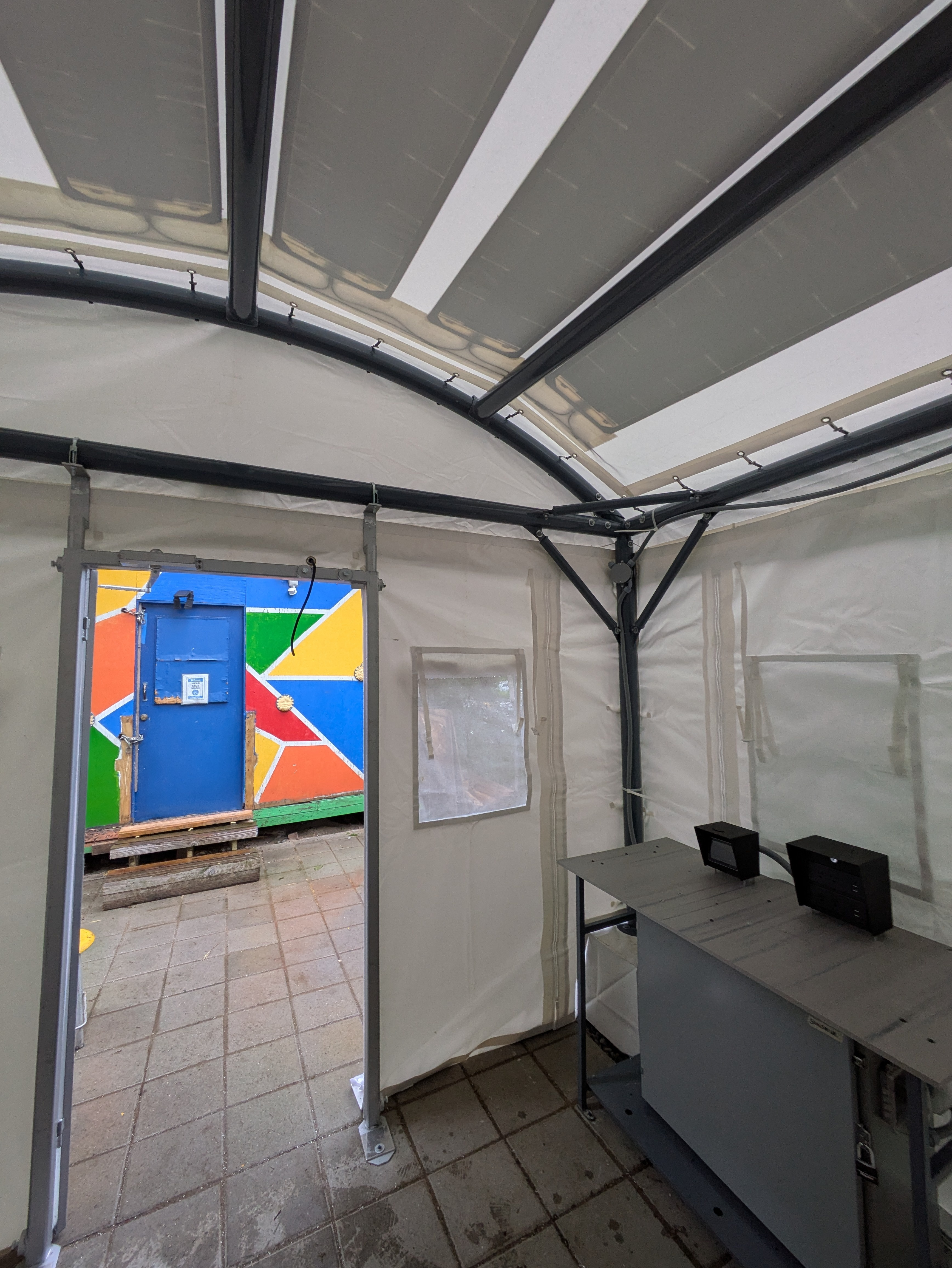
For this project, a series of modular, solar-powered permanent fabric structures were designed, fabricated, and installed to serve as resiliency hubs and multi-functional outdoor structures in Nos Quedamos’ community gardens throughout the Bronx. The structures integrate lightweight, flexible photovoltaics directly into the fabric canopy, providing clean, off-grid power to support a variety of community needs. The structures are fully enclosed with fabric walls, aluminum framed door, operable windows, a 270 amp hour battery and user-friendly graphic display showing the battery charge state, solar power in, and power out.
The fabric roofs also feature integrated rainwater harvesting with water diverters and downspouts leading to above ground cisterns, supporting urban gardening efforts. At night, low-voltage LED floodlights illuminate the area around the structure while interior lighting allows the space to be used for evening activities. These solar canopies are designed for general-purpose outdoor use - such as community gardening, educational programming, public events, and cultural gatherings like galleries and concerts. Most importantly, they serve as vital resilience hubs in the event of a local power outage. In such emergencies, the structures provide sheltered space where community members can charge devices, access Wi-Fi for communication, and gather safely under solar-powered lighting and infrastructure.
The structures are electrically outfitted with a convenient charging station with AC and USB outlets, all powered by the integrated solar array. The charging station is capable of powering hundreds of smart phones and laptops over the course of a few days, while also being able to brew a hot pot of coffee for visitors if there’s no power elsewhere.
The graphic display serves as an education dashboard for the system, presenting real-time data and historical performance metrics related to solar energy generation, storage and usage. As users interact with the system, they gain a better understanding of its capabilities and limitations - knowledge that helps prepare them for the types of emergencies these structures are designed to support.
This project delivers resilient, energy independent infrastructure while promoting sustainable urban gardening. The result is a visually engaging, technologically advanced and environmentally impactful addition to the community garden landscape.
Content is submitted by the participant. ATA is not responsible for the content descriptions of the IAA award winners.
Pvilion