TEXTILES.ORG



Company:
Cool Awnings
Project Details
Fabric 1
Vistaweave
Producer/Manufacturer:
Reid & Twiname Ltd
Primary Use:
Main Fabric
Fabrication Company
Morris Sheetmetals
Please describe the project specifications
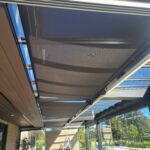
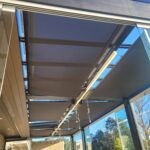
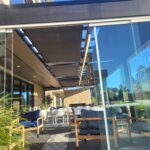
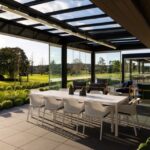
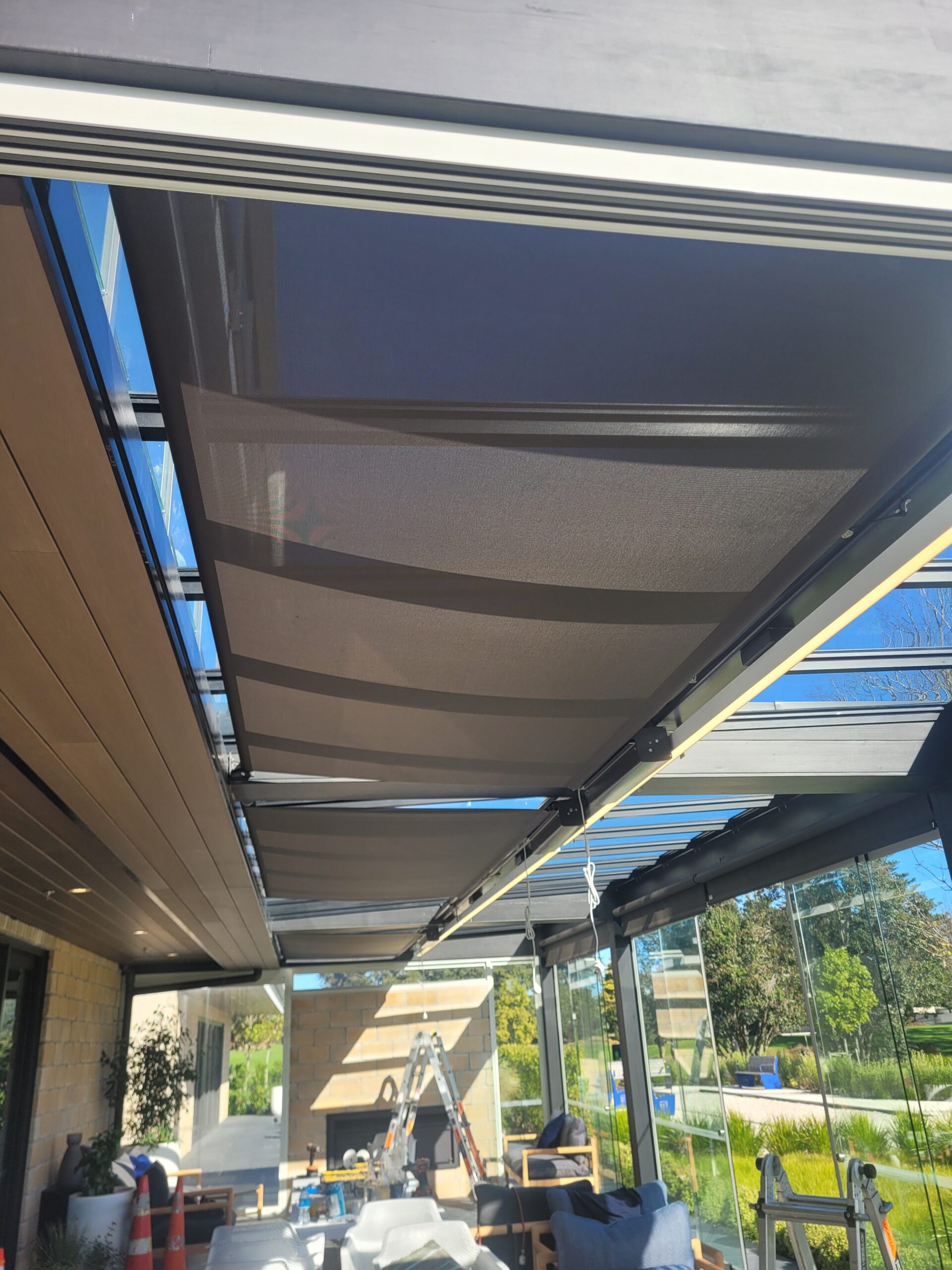
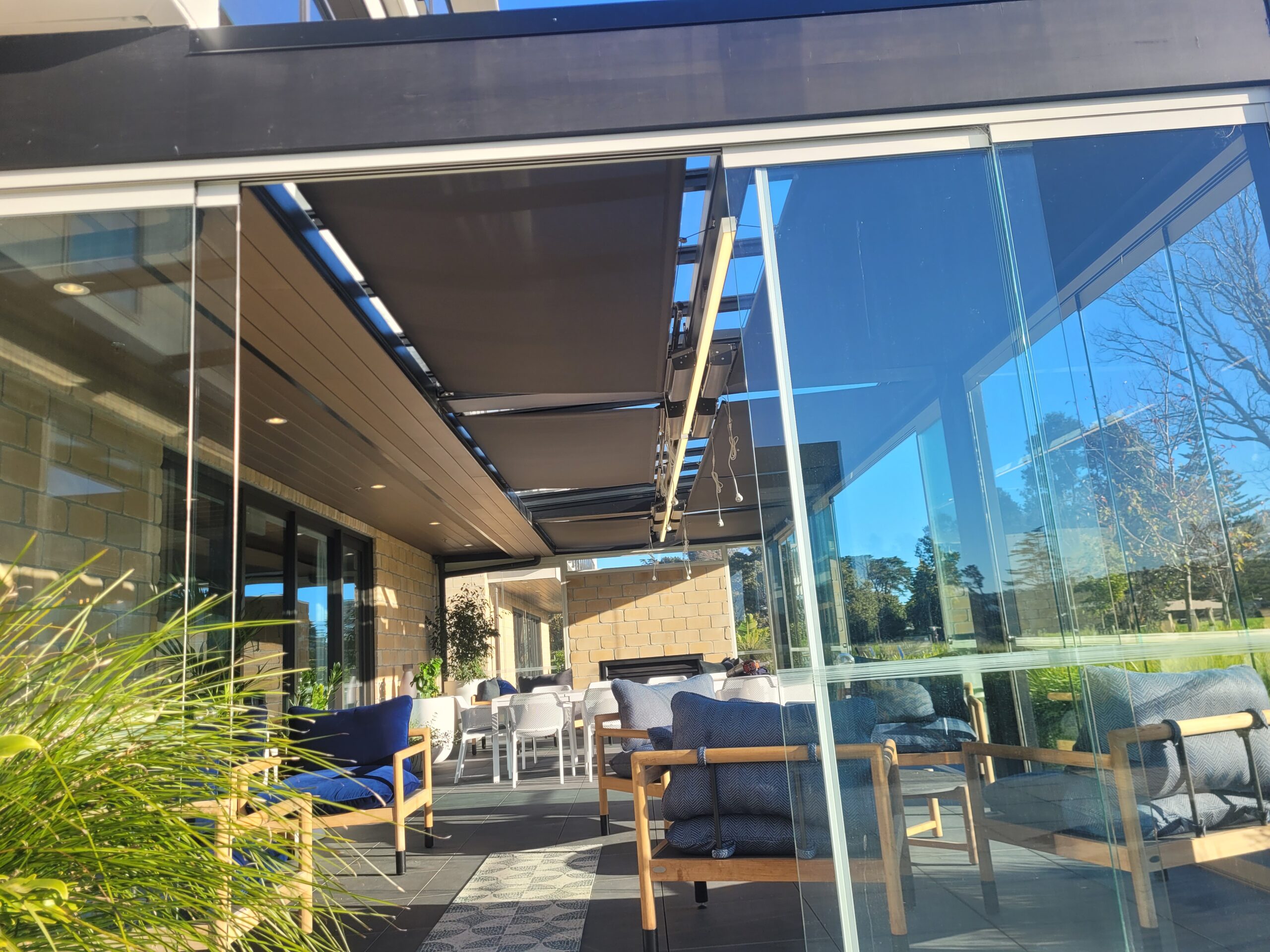
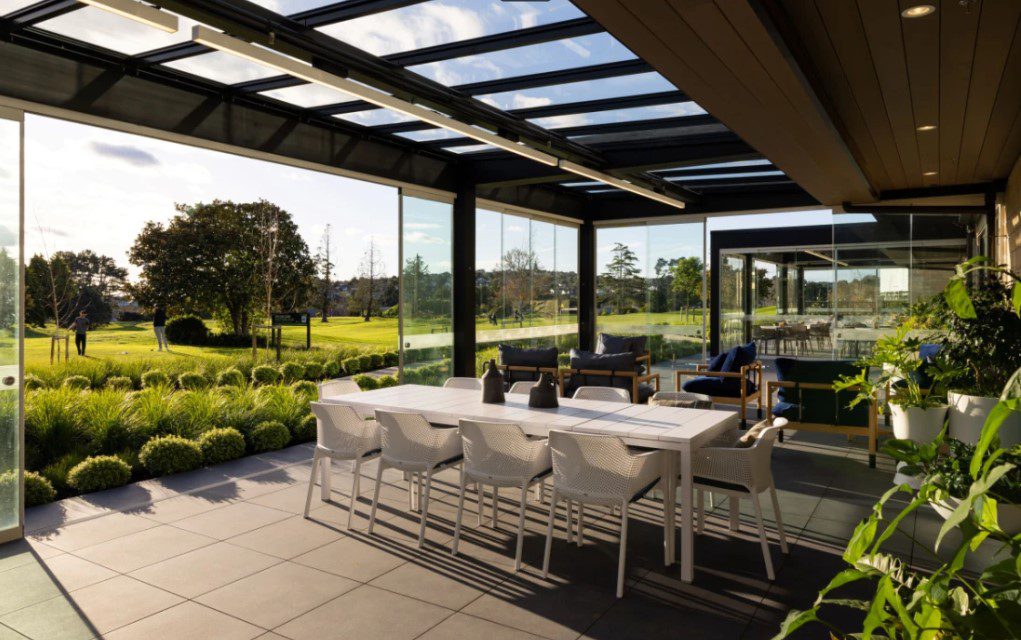
The North facing dining area for the café at a retirement village was glass overhead and all three sides and was effectively an oven.
From its opening the villagers were requesting management to arrange some shade and as the year progressed the heat got worse.
They contacted us for options for shade over and under the glass roof. Under was preferred as mounting on top of the glass conservatory was too expensive.
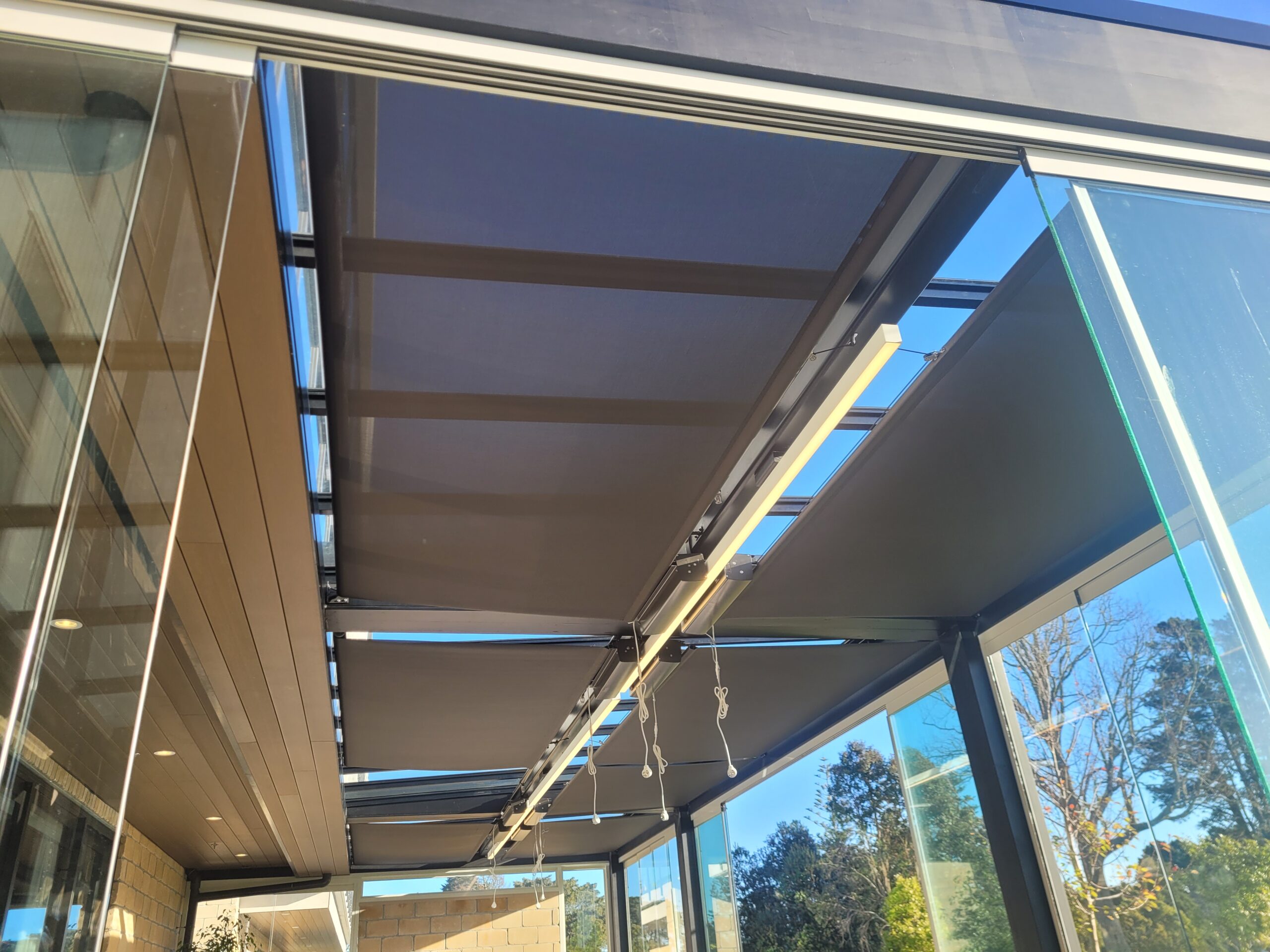
The concept was simple but execution was difficult. The concept was eight small blinds mounted between the rafters and running from the outside to the middle.
The fabric was under tension from a spring in the roller and the system was controlled by a motor in a header box acting as a winch unit by pulling ropes through a system of pulleys.
All the hardware had to be powder coated to match the conservatory, and the fabric had to tie in with the colour of the structure, so everything was a subtle as possible.
We needed to cover as much of the glass roof as possible, and be easy for cafe staff to use.
What is unique or complex about the project?
The concept was simple but execution was difficult
The eight shades ran from each side to the centre. On one side there was no clear location for mounting, so we needed to weld angle to the mounting brackets that hold the roller. The blind then ran to the centre where there was a steel beam. We were not permitted to drill into this beam so we designed and had bent up special brackets to go over the steel beam which would hold the motor and header box. The motors are quite heavy so it had to be a strong bracket - we made it wider to spread the load. The motors were located within a very small header box that was mounted upside down and fixed below the steel beam onto the brackets.
The blinds were operated with a spring in the roller, which kept the fabric under tension at all times, and fabric was pulled out using a rope and pulley system.
We had to figure out a way to keep the rope in position as it wound around the winch within the confines of the header box. After checking out several hardware and variety stores, we found some small dolly wheels that we could remove the rubber from that fit our rollers perfectly. We mounted the rubber tyres around the winch unit and drilled in place.
The rope entered the winch between these tyres.
There was also floating tiles on the floor. No one mentioned or noticed that the floor was made of floating tiles until, on the last awning we cracked one of the tiles.
Had we known they were floating we would have put down plywood sheets prior to using ladders. Our team had to quickly source and get a replacement tile cut and installed before they could open the dining area to the public. Luckily the supplier was local and they had some in stock.
Prior to installation day we had the electrician visit to figure out where to find the power source, and had to wire in all 8 motors on one circuit. He had to run conduit to hide the white cables within the ironsand structure. This was a challenging one for the electrician too.
Content is submitted by the participant. ATA is not responsible for the content descriptions of the IAA award winners.
John Glenn
John Glenn
John Glenn
Metlifecare website