TEXTILES.ORG



Company:
Tasman Canvas ltd
Project Details
Fabric 1
Shadeview urban graphite
Producer/Manufacturer:
QCD Ltd.
Primary Use:
Main Fabric
Fabric 2
ziptrack components
Producer/Manufacturer:
QCD Ltd.
Primary Use:
Hardware/Findings
Please describe the project specifications
Our client had just built a glass roof outdoor area and was being overwhelmed by the heat build up through the glass panels. We had previously done vertical motorized Ziptrack for this client and they loved the system.
Could we provide a motorized horizontal screen option?
The 7 individual panels between the steel rafters were 1.2 and 1.5m wide and only 3m long.
As we had not done this before , we approached the suppliers of screen systems for any system designed for this purpose.
We find we are unable to source a system designed for this application , it seems that all tracked screens are warrantied only for vertical application .
As we were close to the 2024 trade conference in Christchurch and the client was supportive of our research, we decide to do the rounds of suppliers and talk amongst other fabricators and get some idea of what had been done before . While there were some manual horizontal screen stories, motorized versions were not talked about.
The desire for motorization had some obvious challenges such as how to govern the need for both rolls rolling at the same time and at the same speed.
The main trouble now was that it seems that no supplier or system manufacturer will support their systems use for this application, so no warranty for the client or support for a fabricator /installer. In this particular case the existing long term client was onboard with the challenge and committed to the cost of servicing the system and also that we were also willing to commit to the project on there behalf.
As we have experience with motorized Ziptrack with our clients support we decide to start with a trial with a test bed in the workshop. Initially we considered using motors at both ends but combining both motors into one remote command proved difficult .
So we decide to trial using a motor in the roller tube at the end doing the pulling and a spring at the end with the fabric roller tube .
The narrow width means we couldnt use the heavier weight spring in the screens. Luckily the med weight spring was sufficient. We can use a majority of standard Ziptrack componants including pelmets at both ends of the side channels . We trial using cut down and overlocked spline tapes to do the job of drawing out the screen. We then mount these direct to the 'bottom' bar.
We get our local engineers to fabricate aluminium spools which sleeve onto the motorized tube end of the assembly to guide the spline tapes.
Surprisingly , the system seems to work quite well at the early stage of trials in the workshop, well enough in the cool workshop anyway.....In hindsight I identified then that the bar ends could do with a roller or something .
We get the clients builder involved for a demonstration and based on the prototype we get the go ahead to take the next step of fabricating the remaining 6 screens and starting the install.
Late December, working directly under a glass ceiling with full sun above was intense , the pelmets and bottom bar are too hot to handle without gloves. We devise a cover for the glass to work under which helps the process.
With all the screens in place we can start the programming and start putting the screens through their paces. The motors work fine for pulling the screens out but with some shuddering and they occasionally jam heading back. We loosen the side channels to allow for some drape between the side channels which helps, trim the bottom bar to allow some more room there and add more turns to the springs. We reinstall with
better results although still notice some shuddering as the screens are being drawn out by the motors.
When I check back with our client in January I find they have been having issues with some of the screens jamming.
So back to the site, we find 4 out of the 7 screens are not functioning well . They jam on the way back under spring load , they will not stay level either we set them square at one end and by the time they have get to the far end they are crooked. Time for some problem solving. What are the issues?
Friction is definitely causing problems as evidenced by the shuddering. Sources of friction include the screens themselves with gravity loading the spline tapes, the plastic end caps on the bottom bar are another possibly major cause of friction and also the cut down spline tapes used for drawing out the screens.
Stretch is the next problem obviously causing issues. The cut down spline tapes , without being attached to a base fabric have quite a lot of stretch in them. This is what is causing the uneven draw out . Also they are all slightly different because of the overlocking and this is causing uneven loading onto the spools causing differing diameters on each side resulting in uneven bar levels.
Answers: Eliminate 'lots' of friction. Firstly the cut down spline tapes have to go, them also running in the side channels is not helping.
We also decide to eliminate the bottom bar caps as these large plastic items rubbing on the side channels are obviously causing the major friction source.
Early in the process with the trials I had considered having a wheel or a roller etc coming off the bottom bar but with the trials going well initially I had decided it was not necessary . Now it seems like a good way forward. I find some great little 19mm micro bearings and fabricate some plates to mount these bearings on and to attach to the bottom bar. These bearings run on top of the side channels and have reduced the friction by over 50%. To replace the spline tapes initially we trial 2.5mm stainless steel wire but find the noise of the wire stacking onto the spools is telegraphed through the tubes,echoing in the pelmets and making a hell of a ruckus. We swap out the wire for 3mm spectra braid running through a deadeye prior to the spools and this quitens the system down to the motor noise only.
We carefully set the side channels , reprogram the top and bottom stops and finally we have 7 screens gliding in and out , one after the other like cowboys and cowgirls in a line dance. Is this the last we will hear about it? Probably not, luckily we have a client who appreciates our efforts and understands the challenges.
Would I do it again? Yes , of course. I think they should only be relatively small, not a lot bigger than the ones we did. Is there a better way to achieve this result? Probably but it was great to have a good attempt.
What is unique or complex about the project?
As stated , our client of many years had recently had us install vertical motorised ziptrack screens in the outdood area at their town house. The area is glassed in and they were suffering to much heat build up. They asked us to provide a horizontal option.
We entered these screens into the awards because of the novel use of an existing system and the subsequent problem solving exercises that we went through to make the system work.
This project is unique in that when we made enquiries for a solution in the industry we found that none was available, therefore with our clients full support we used a trial and error development process to overcome the technical problems and deliver a functional solution.
Content is submitted by the participant. ATA is not responsible for the content descriptions of the IAA award winners.
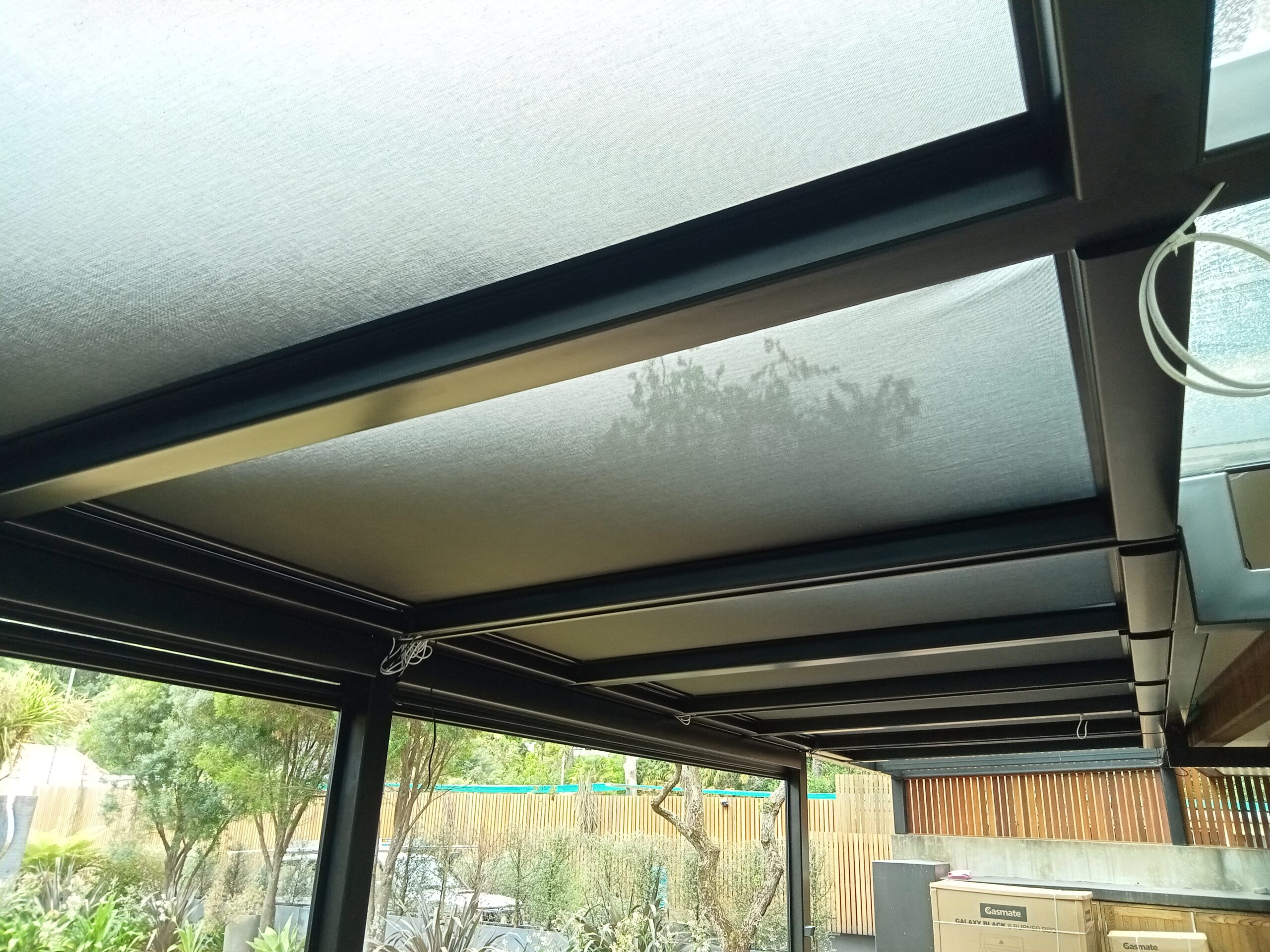
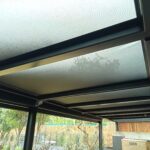
Ziptrack screens install -Horizontal#1

Ziptrack screens install -Horizontal#2
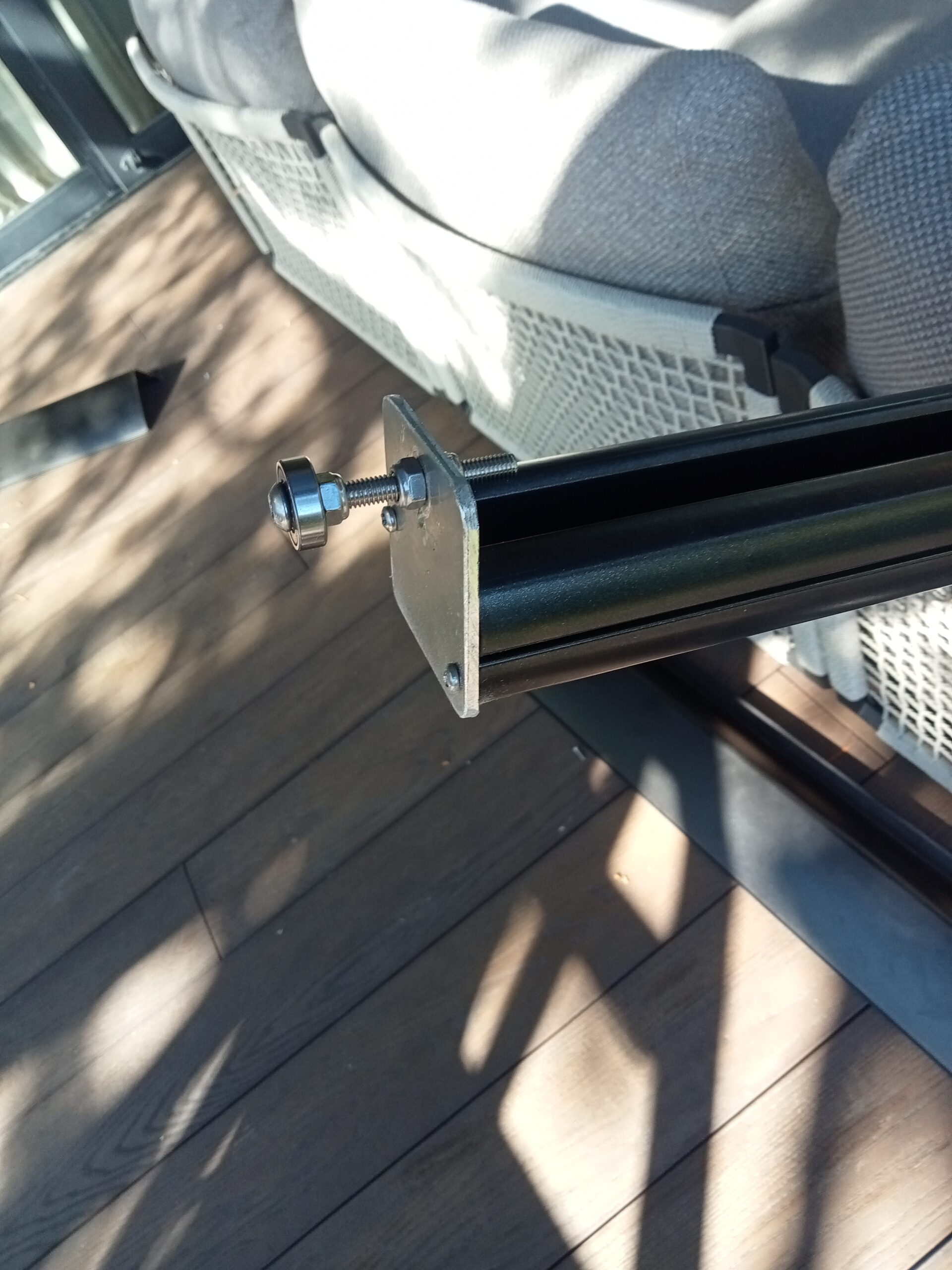
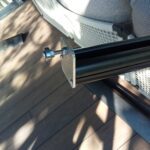
detail- bearing assembly

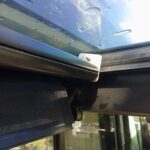
detail -bearing assembly installed