TEXTILES.ORG



Company:
Makmax Australia
Project Details
Fabric 1
Xtrem TX30-II
Producer/Manufacturer:
Serge Ferrari
Primary Use:
Main Fabric
Engineer Company 1
TTW
Architect Company
Hassell
Fabrication Company
Copelands & Pickers Pty Ltd
Subcontractor Company
H&H Construction, SYDRig
Please describe the project specifications
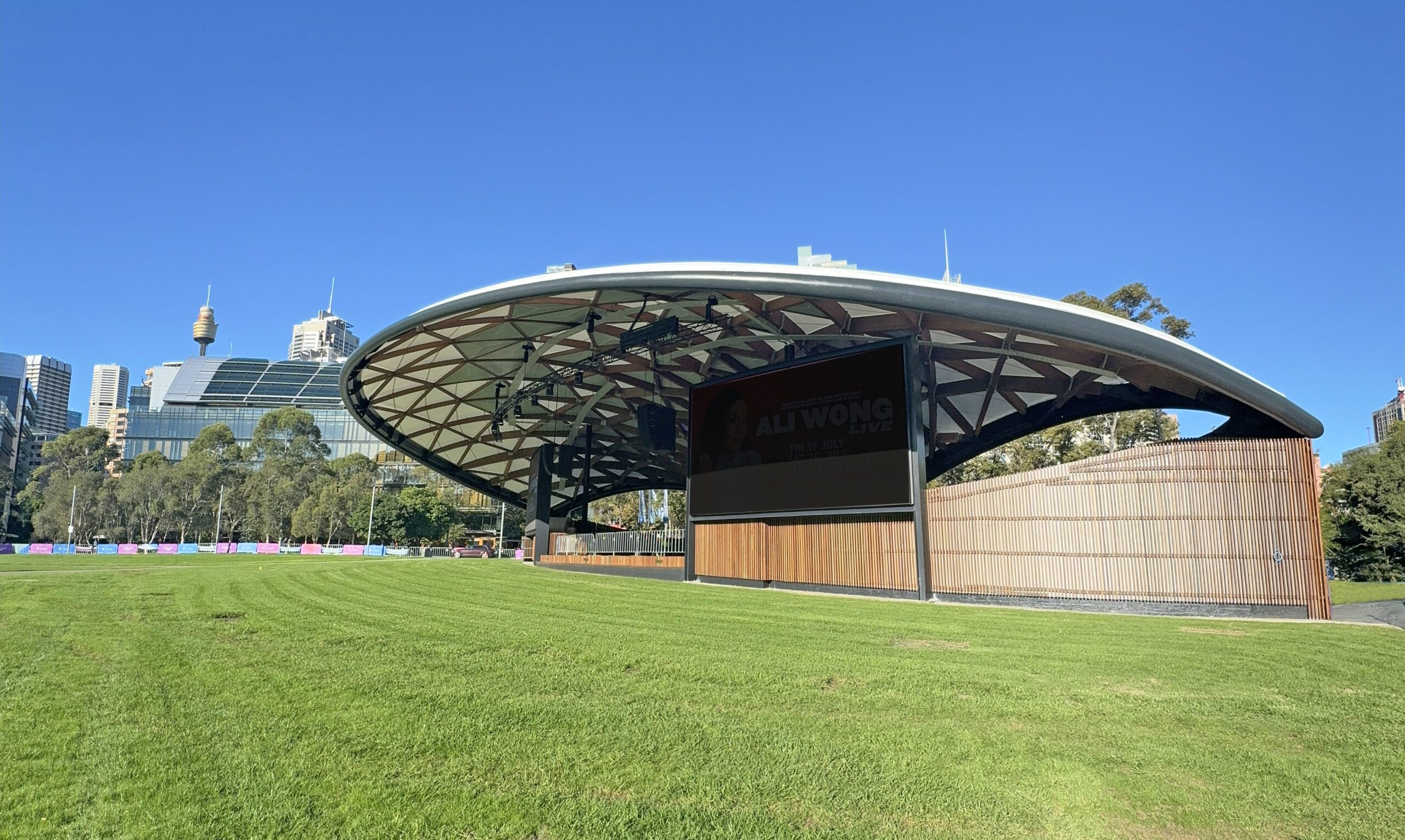
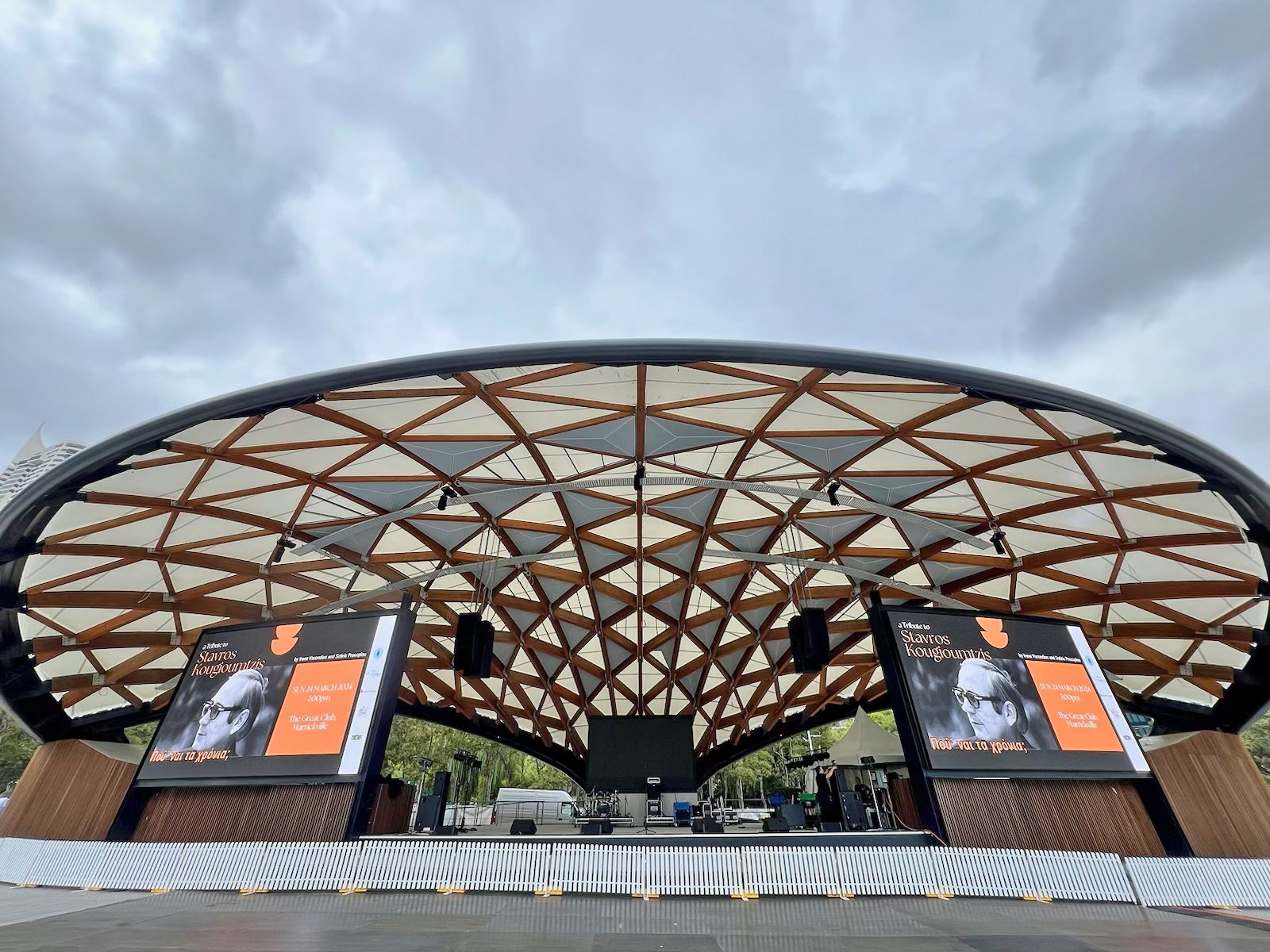
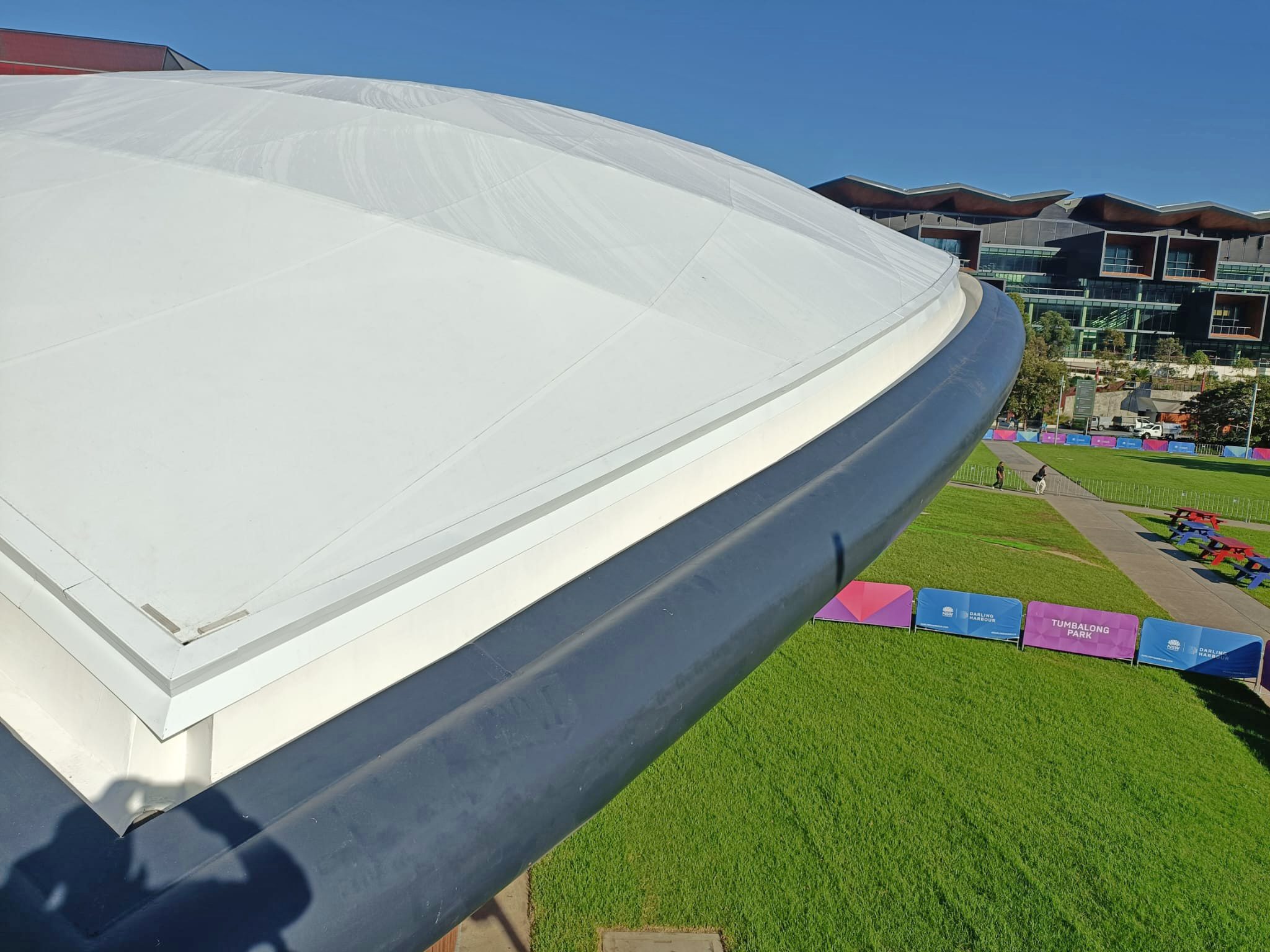
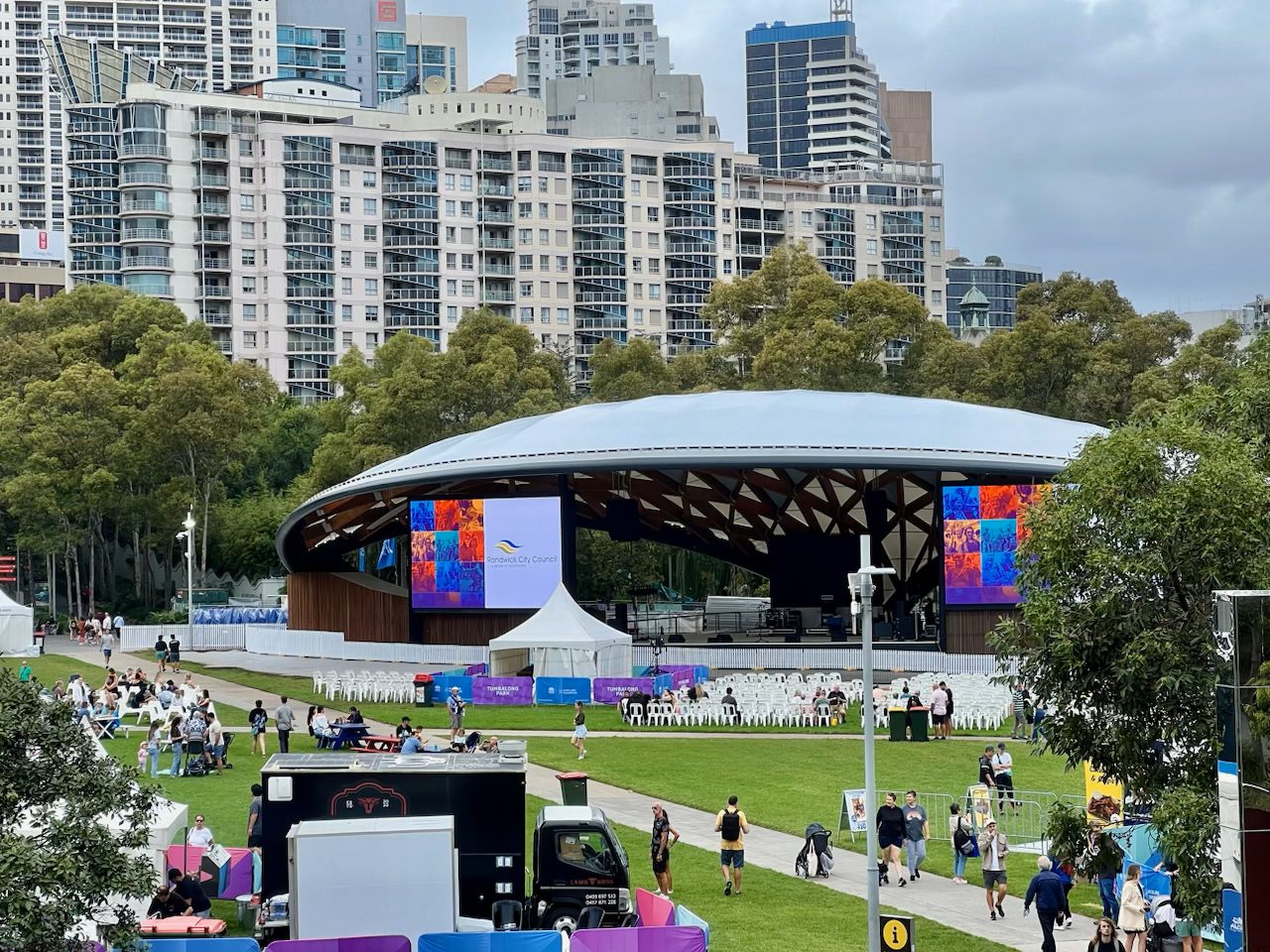
Creating a showpiece architectural structure in Darling Harbour, the Tumbalong Green Amphitheatre is a remarkable marriage of beautiful elements and engineering expertise. The soundshell curves up and over the stage, allowing sound to wash over the audience like a breaking wave. An example of architectural design meeting functionality, the combination of Cross Laminated Timber (CLT) structural elements supporting an 1100 square metre PVC membrane has created a lightweight and visually appealing stage roof. The project architect for the Tumbalong Green Amphitheatre designed a stunning shell-shaped amphitheatre to upgrade and modernise the existing bat-wing style tensile membrane stage roof.
Our scope on the project was to design and engineer the architectural fabric cladding that makes up the outer layer of the Tumbalong Green Amphitheatre Roof. This included the three-dimensional form-finding and patterning of the fabric to achieve the desired multi-plane curvature, as well as designing an extruded aluminium fixing system to interface with the steel and CLT elements of the roof. A small but visually prominent part of the entire project, the design and form-finding process for the tensile membrane element of the Tumbalong Green Amphitheatre demanded extensive communication with stakeholders and considerable patience as the project advanced. Designing membranes with multi-plane arched curvature requires sophisticated form-finding software to determine the optimal cutting pattern and pre-stress loads necessary to achieve the desired final form while also ensuring proper tension distribution.
Using a parametric 3D model of the structure, we were able to analyse the loading of the membrane alongside the other structural elements, providing real-time feedback to the head contractor and specialist CLT contractor. The live parametric model also enabled us to design and engineer the fixing elements required to attach and tension the fabric onto the structure. For example, the cleat system to fix the aluminium extrusions to the outer steel ring beam. We supplied specification and technical drawings back to the head contractor to include in their steel fabrication plans.
In the early stages of the project, we helped address a minor design issue related to material reflectance. The council raised concerns that the bright white fabric might cause excessive glare and affect nearby buildings. To address this, we worked with the architect, head contractor, and fabric manufacturer, Serge Ferrari. Serge Ferrari commissioned an official Light Reflectance Value (LRV) report for their TX30-II material. The report confirmed that the LRV met approval requirements, allowing the project to proceed with the TX30-II PVC membrane.
Following the approval of the initial designs and the development of membrane cutting/fabrication plans, our biggest challenge was navigating the waiting period as the project installation progressed through various phases. Despite the membrane canopy being fully designed and ready to send to our fabrication partners in Brisbane, achieving the most accurate patterning necessitated waiting until the structure was fully erected to perform a site measurement prior to fabrication.
Unexpected project delays resulted in a 14-month gap between the final approval of our designs by the architect and the issuance of the fabric plotting book to the fabricators. Survey site measurement involved additional complexities due to limited site access and low-level survey accuracy.
The entire fabric roof was fabricated into a single fan-shaped membrane, constructed by plotting, cutting, and welding together nearly 280 separate fabric panels (with an internal seam length of more than a kilometre). The fabricated roof fabric spans 56 metres at its widest point and 32 metres from front to back.
Once onsite, the folded fabric was craned into place in the centre of the CLT roof. The single fabric panel was then unfolded and affixed to the extruded aluminium connections. The 130-metre perimeter length features a 12mm rope edge welded into place for the extrusions to grip.
Ultimately, after months of waiting for our turn to mobilise, we completed our installation phase quickly and efficiently. Crews were onsite for only five days for the main installation, with a final visit to complete flashings and a final fabric cleaning once other trades had finished their respective sections.
Content is submitted by the participant. ATA is not responsible for the content descriptions of the IAA award winners.
MakMax Australia
MakMax Australia
MakMax Australia
MakMax Australia