TEXTILES.ORG



Company:
Solmax
Project Details
Fabric 1
OSMORIA Indigreen
Producer/Manufacturer:
Solmax International Inc.
Primary Use:
Main Fabric
Please describe the project specifications
Overview
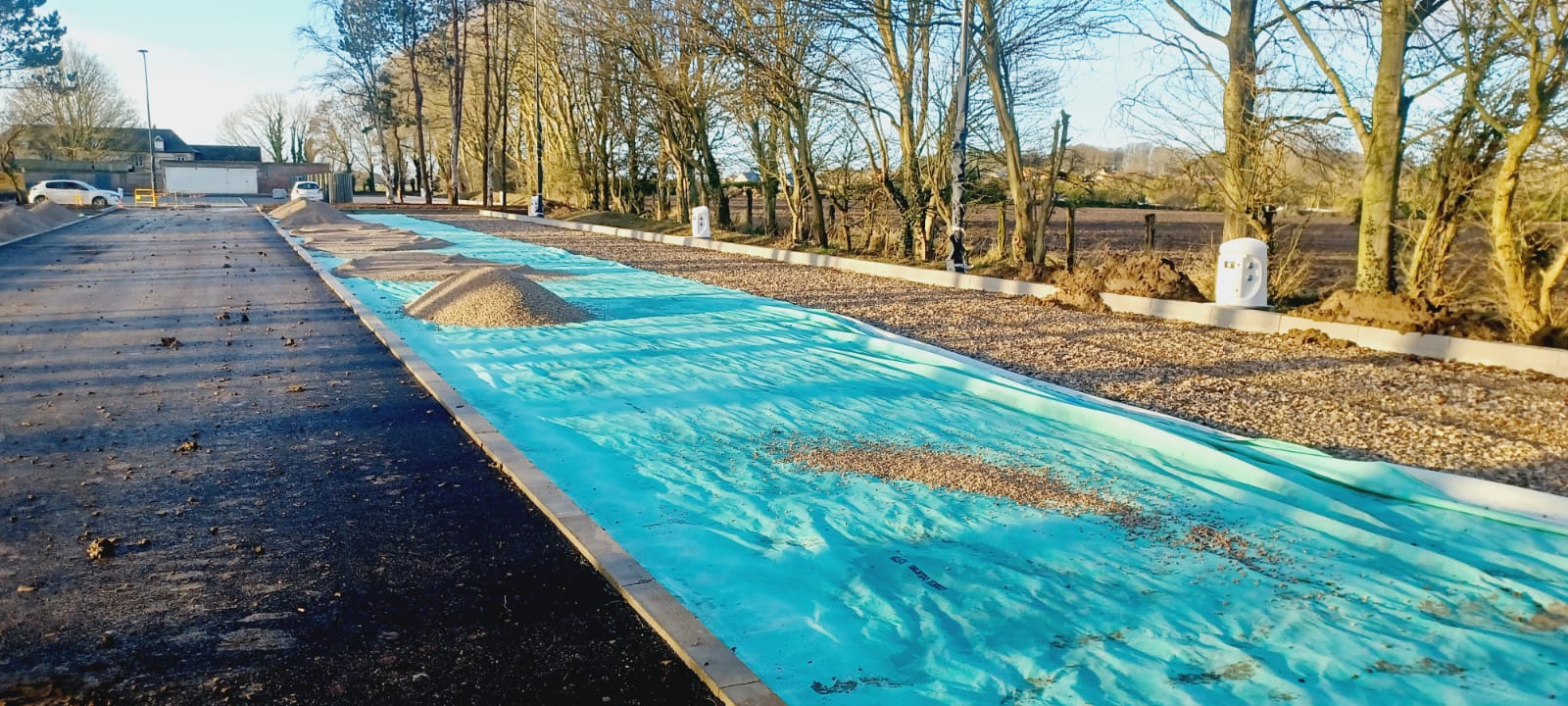
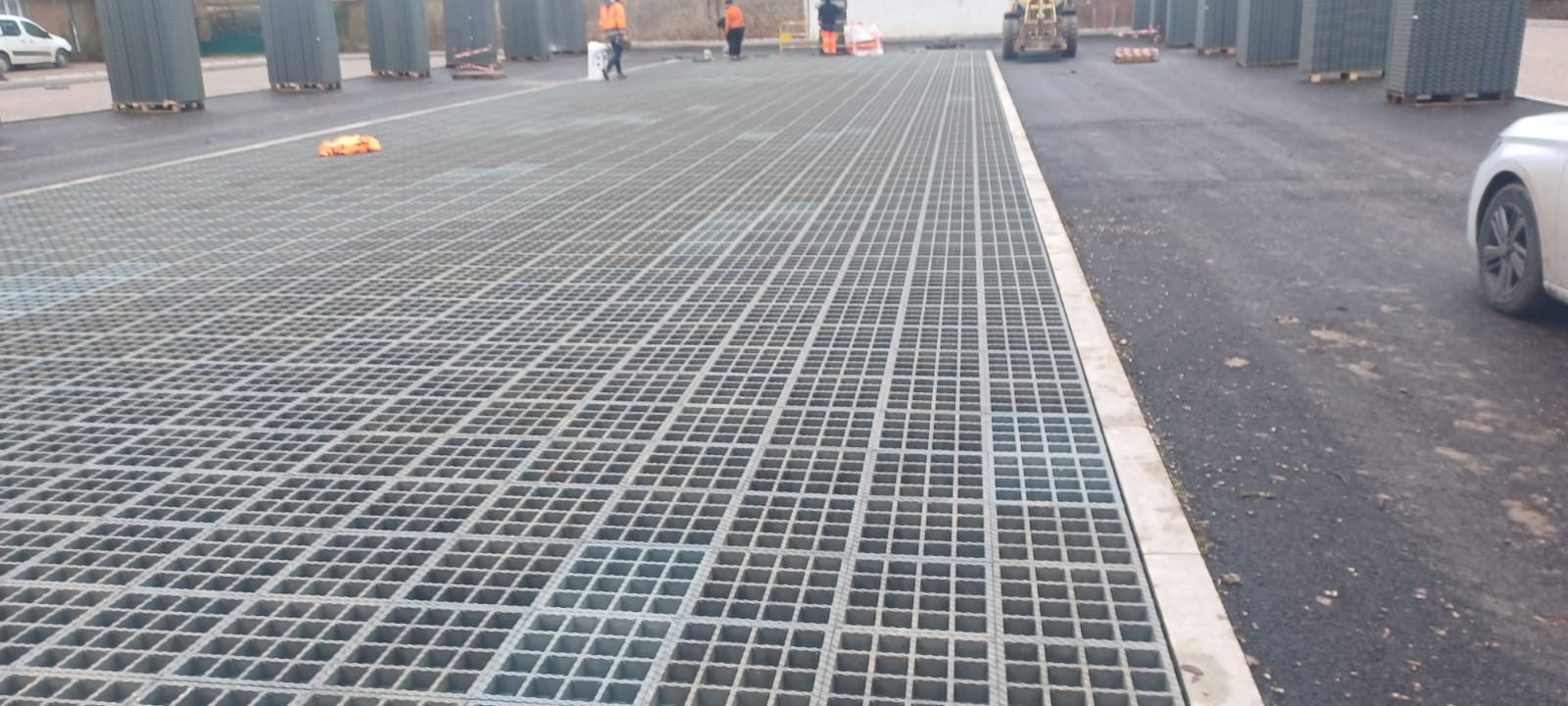
A temporary permeable parking area was developed in Tréport, France, to accommodate workers involved in the Penly EPR2 nuclear power plant project. The large-scale infrastructure program requires several thousand workers during peak construction phases, creating temporary demand for supporting infrastructure in the surrounding region. The City of Tréport implemented a 2,800 m² parking area designed to accommodate camper vehicles used by workers on the project.
From the outset, the parking area was designed as a permeable surface to allow stormwater to infiltrate directly at the source rather than being collected and discharged elsewhere. However, on parking areas used by vehicles, rainwater can also carry residues from oil, grease, fuel leaks, and vehicle wear. As this runoff infiltrates through the parking structure and continues into the ground, these pollutants may migrate with the water and potentially contaminate the soil and groundwater. For this reason, the design had to address not only stormwater infiltration, but also the quality of the water being infiltrated.
Challenge
Permeable parking areas are often selected to limit the environmental impact of a development by allowing stormwater to infiltrate directly at the source. They can also reduce the overall project cost and construction footprint by avoiding the need to connect the site to conventional stormwater networks or build dedicated drainage and retention infrastructure.
For this project, this economic and construction efficiency was a major driver. The parking area was temporary and intended to serve workers during the construction phase of the Penly EPR2 project, so installing extensive stormwater collection, connection, or treatment infrastructure would have added cost and complexity to a facility with a limited-service life.
However, allowing runoff to infiltrate at the source also meant that pollution from vehicle activity had to be considered. Rainwater passing through the parking surface can carry oil, grease, fuel residues, and other hydrocarbons into the ground, with potential impacts on soil and groundwater. The City of Tréport therefore required a solution that could maintain the benefits of a permeable surface while addressing stormwater pollution directly within the parking structure.
Solution
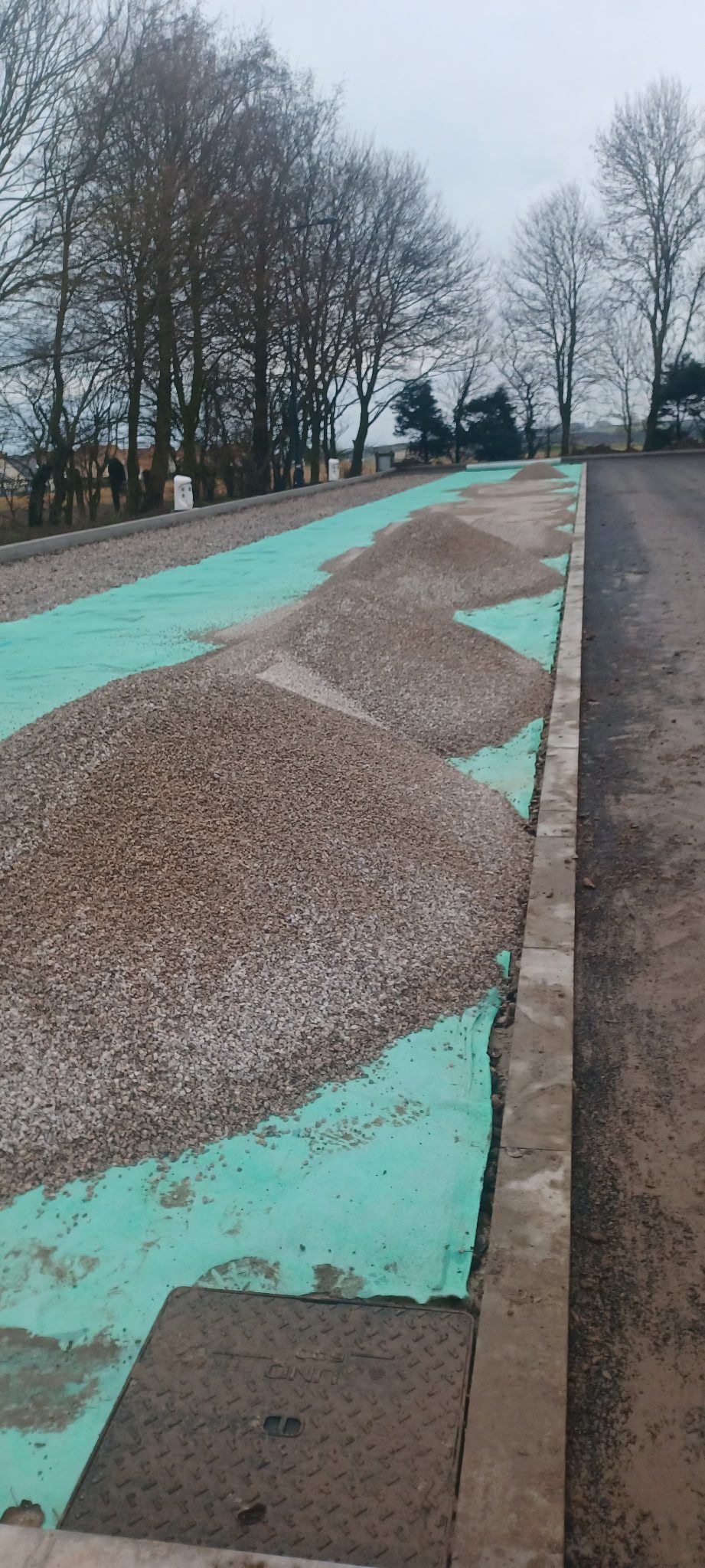
The project incorporated OSMORIA Indigreen across the 2,800 m² parking area to manage stormwater quality during infiltration. OSMORIA Indigreen is an aquatextile, a technical textile designed to treat runoff pollution while allowing water to pass through highly permeable layers. Rather than acting as a simple infiltration medium, the system manages stormwater quality as water moves through the structure.
OSMORIA Indigreen improves both hydrocarbon retention and biodegradation compared with natural soil alone. As stormwater passes through the permeable structure, hydrocarbons and PAHs are fixed onto the aquatextile, limiting their migration into the soil and groundwater. At the same time, the mineral nutrients provided by the aquatextile fibres encourage microorganisms naturally present in the soil and water to rapidly colonize its porous structure. Already adapted to local soil conditions, pH, temperature, humidity, and the pollutants themselves, these endemic microorganisms help break down the hydrocarbons retained by the aquatextile more systematically and efficiently over time.
This approach allows runoff to infiltrate on site while integrating a pollution-control stage directly within the permeable parking structure. By capturing hydrocarbons and PAHs in the aquatextile layer and supporting their biodegradation before the water continues into the ground, OSMORIA Indigreen helps protect the soil and groundwater while maintaining the permeability required for source-control stormwater management. For this temporary infrastructure project, it provided a simple and economical way to manage runoff quality without adding conventional stormwater collection or treatment infrastructure.
Content is submitted by the participant. ATA is not responsible for the content descriptions of the IAA award winners.
Solmax
Solmax
Solmax