TEXTILES.ORG



Company:
MakMax Australia
Project Details
Fabric 1
FGT800 PTFE
Producer/Manufacturer:
Chukoh Chemical Industries Ltd.
Primary Use:
Main Fabric
Fabric 2
Fluon 250 NJ ETFE
Producer/Manufacturer:
AGC Chemicals Company Inc.
Primary Use:
Secondary Fabric
Engineer Company 1
Aurecon
Architect Company
Cox
Fabrication Company
Shanghai Taiyo Kogyo
Subcontractor Company
JG Vertical, C&C Advanced Rigging Pty Ltd
Please describe the project specifications
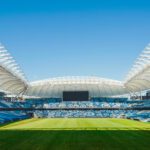
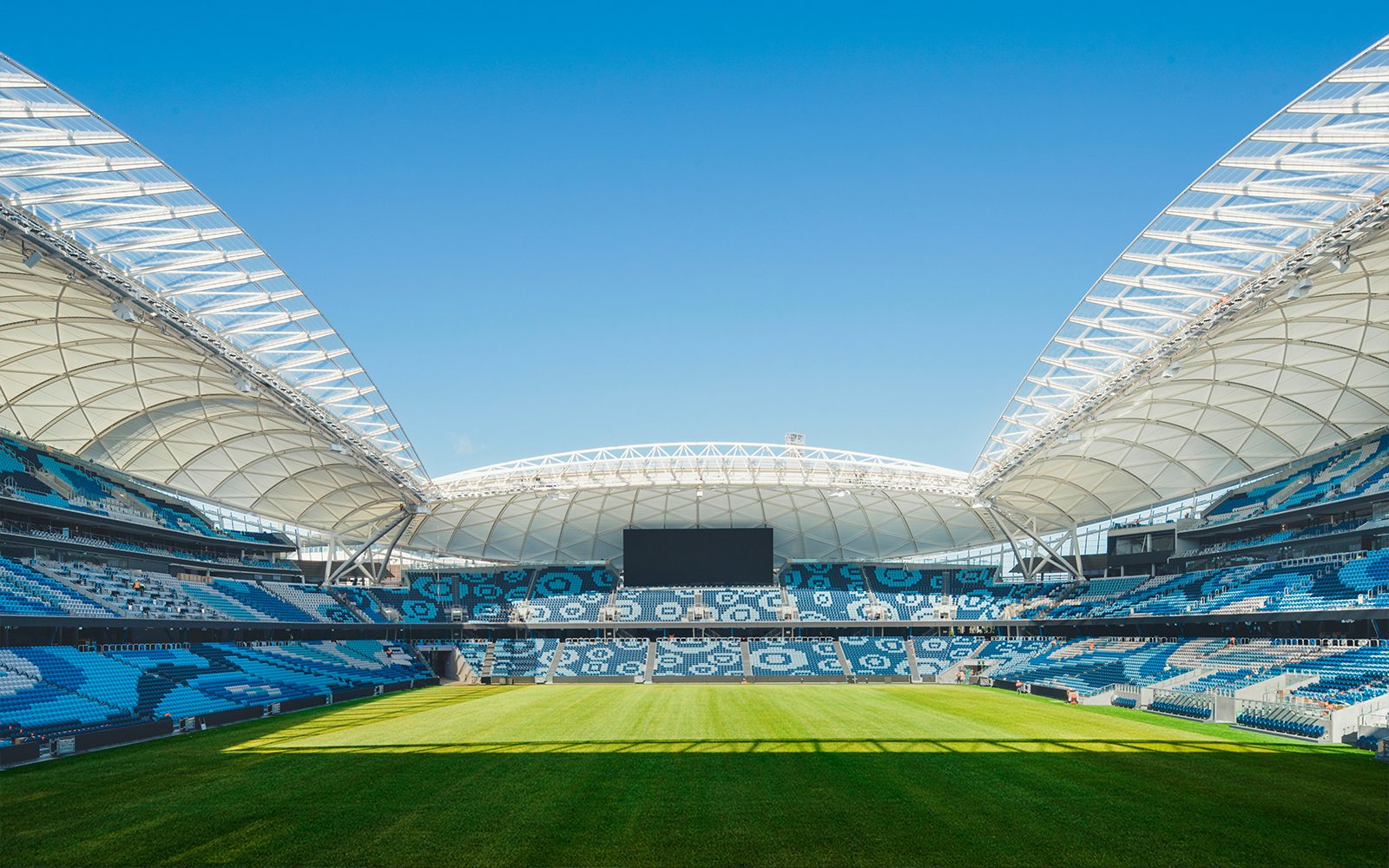
The Sydney Football Stadium Roof, completed in 2022, joins a growing list of major international iconic stadiums featuring tensile membrane roofing. The highly visible 26,000 square metre PTFE panel roof with an ETFE leading edge is the crowning glory of this new world-class stadium in Sydney.
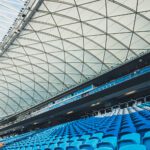
The tensile membrane roof helps protect sporting spectators and live concert fans from sun, wind, and rain, while the lightweight diagrid steel structure provides an architecturally stunning arched canopy to amplify the roar of the crowd.
In late 2019, we became involved with the Sydney Football Stadium design management team, which included the nominated construction firm, the project architect, and the project engineers. We contributed design and engineering assistance and ultimately installed the tensile membrane roof for the new Sydney football stadium.
The original project brief from the NSW government required 'the key formal elements of the Stadium – the Stadium Domain, Seating Bowl, Façade, and Stadium Roof – to be physically well integrated with each other and exploit the opportunity to articulate a consistent strong and dynamic architectural language.' Further specifications required the roof and roofing elements to provide the transmission of natural light into interior areas, provide thermal resistance to heat transfer, provide acoustic performance in accordance with internal environments, and provide weather protection to minimize corrosion or deterioration of the interior stadium elements.
These specifications naturally led to the proposal of a tensile membrane roof. We proposed PTFE as the main roof cladding element as the most suitable choice to meet the project brief, architectural design requirements, expected project design life, and functionality.
Based on our experience with tensile membranes, we were able to recommend some roof profile changes from the original design to maximize the strength of the roof by using the tensile nature of the fabric as a core structural component, as opposed to just a cladding material.
Working with a complete 3D parametric model of the stadium roof, our in-house engineers were able to work in an extremely collaborative way with the project design team. Working with the 3D modelling parametrically meant that we could apply rules and instantly generate updates over the entire roof when any design changes were made to the structural elements. This information was then instantly communicated back to the project team, the architects, and through to our international fabrication teams.
Like on any large-scale stadium project, with the Sydney Football Stadium, there were hundreds (sometimes thousands) of small, repetitive details, with no two of those details being exactly the same. Attention to detail from start to finish, through every step of the process, was both critically important and also the biggest challenge on this project.
For example, the roof contained 48 massive PTFE roof panels supported on a lightweight diagrid steel frame. While the panels were all similar in overall shape and fabrication requirements, they were all just slightly different in geometry or size based on their intended install location around the roof. Using a 3D parametric model, which was constantly updated during the design consultation process, meant that we had live models of every section of the roof. These models could then be shared directly with fabricators, installers, and the project management team.
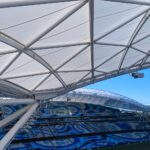
We also designed and installed 96 ultra-lightweight ETFE panels, with each panel containing integrated stainless-steel cabling for strength and support. Every one of the 1100 cables (over 5km in total length) needed to be fabricated to the correct length based on the exact location and geometry of the panels.
A further 900 square meters of vertical PTFE infill panels were installed to interface between the two key components of the roof. The sheer number of connection details involved in the whole roof was enormous.
Even with live 3D modelling at our disposal, to avoid running into any surprises when installing the roof sections at over 30 meters up in the air, we made a series of full-scale offsite mock-ups in our Queensland factory. These mock-ups included many of the roofing sections, panel connections, guttering, and various other interfaces. These many and varied mock-ups were built to practically test our designs, such as water-flow testing on our guttering designs to ensure they could handle the expected volumes of rainwater. The mock-ups were also used to test small connection details, to make sure that when the various fabric and hardware components from the multitude of suppliers arrived on site, we'd already planned and solved any installation challenges or questions. This also gave us time to have some contingencies in hand in case there was something we'd missed or when the unexpected occurred.
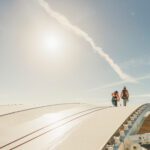
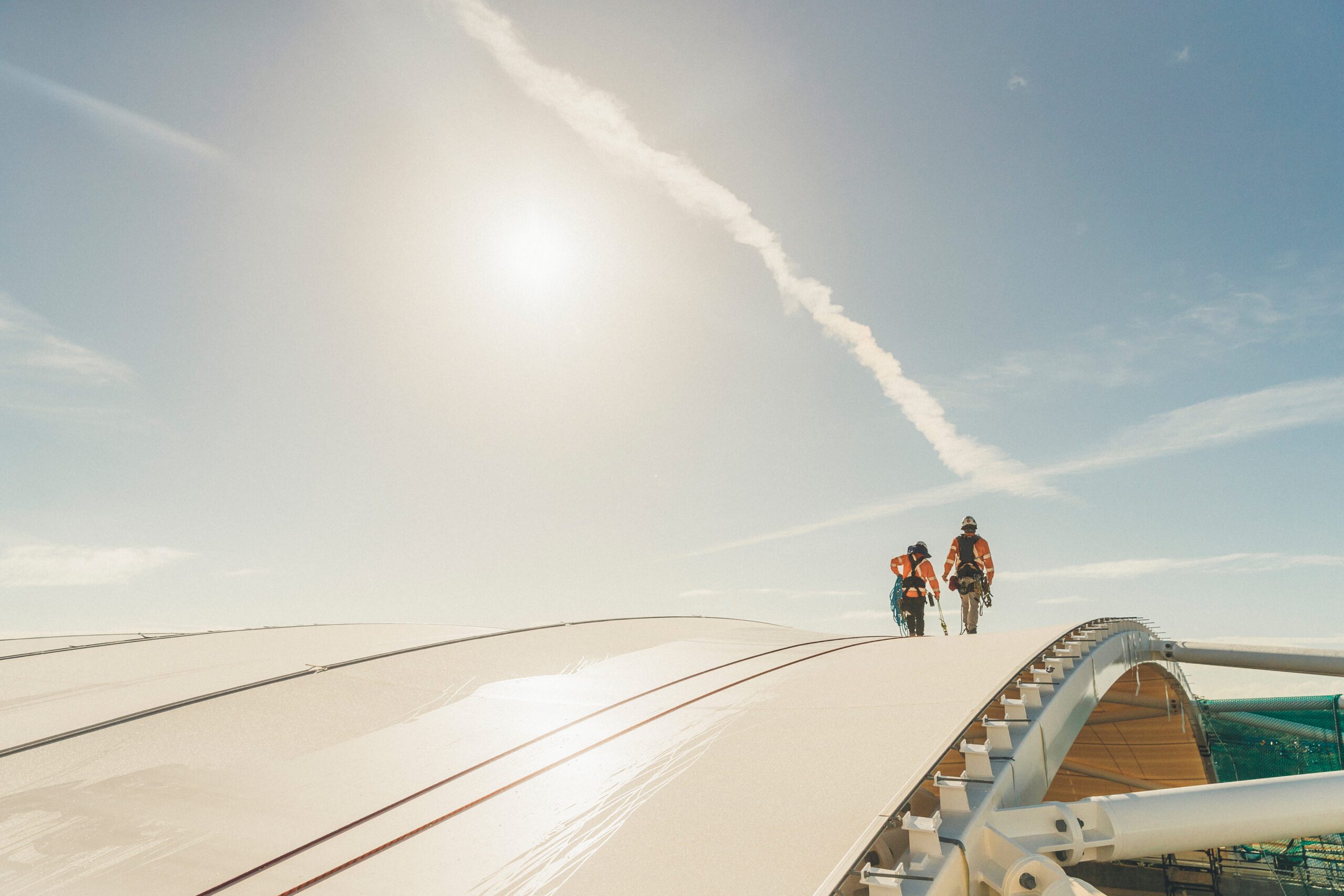
With a massive public-works project of this size, there are always a range of challenges to be solved. One of the key challenges was the need to work safely above other trades and subcontractors. To meet the tight schedule, there were a wide range of stadium elements being constructed concurrently. An example of this was the installation of the ETFE panels. Installed at between 36 and 46 meters in the air, we had a number of team members working from EWPs, as well as working on a netting system that had been developed for previous ETFE projects. The ETFE panels were being installed at the same time as the seating was being set in place, so very strict health and safety protocols were adhered to.
The other major challenges faced on this project were unprecedented and we were not able to plan for. With the project kicking off in January 2020, the installation phase (2021-2022) of the stadium fell right into the middle of the global COVID-19 pandemic. Border closures, freight disruptions, site shutdowns, extended sick leave periods, and incredibly strict COVID-19 safety protocols on site made this one of the most challenging installation projects we have ever faced.
Compounding the pandemic disruptions, 2022 has also gone down as the wettest year on record in NSW, and with almost all our installation elements taking place, up in the air in the worst of the wind and weather, there were many days lost to weather closure and inability to work on site.
With the stadium opening right on schedule, in time for the last round of the 2022 NRL season, the completed roof is a testament to the hard work of our install teams, as well as the efficiencies created early in the project using parametric 3D modelling and offsite prototyping.
As with many other companies in the construction industry, during the 2 years of the pandemic, we were beset by unexpected material price rises, global supply chain challenges, cross-border restrictions, and difficulty hiring skilled labour. These challenges were met head-on and forced us to develop a number of new processes and installation methodologies to be able to complete the project on time.
The final result is an outstanding achievement, and we could not be more proud to have been involved in such an iconic tensile membrane project here in Australia.
Content is submitted by the participant. ATA is not responsible for the content descriptions of the IAA award winners.
Damien Ford

Damien Ford

MakMax Australia
Damien Ford