TEXTILES.ORG



Company:
ACE Geosynthetics Inc. / Global Synthetics Pty Ltd
Project Details
Fabric 1
ACEGrid® GG250-II
Producer/Manufacturer:
ACE Geosynthetics Inc.
Primary Use:
Veneer reinforcement
Fabric 2
ACEGrid® GG100-II
Producer/Manufacturer:
ACE Geosynthetics Inc.
Primary Use:
Basal reinforcement
Engineer Company 1
Hazell Bros
Design Company
ATC Williams Pty Ltd
Subcontractor Company
Fabtech
Project Manager Company
Veolia ANZ
Please describe the project specifications
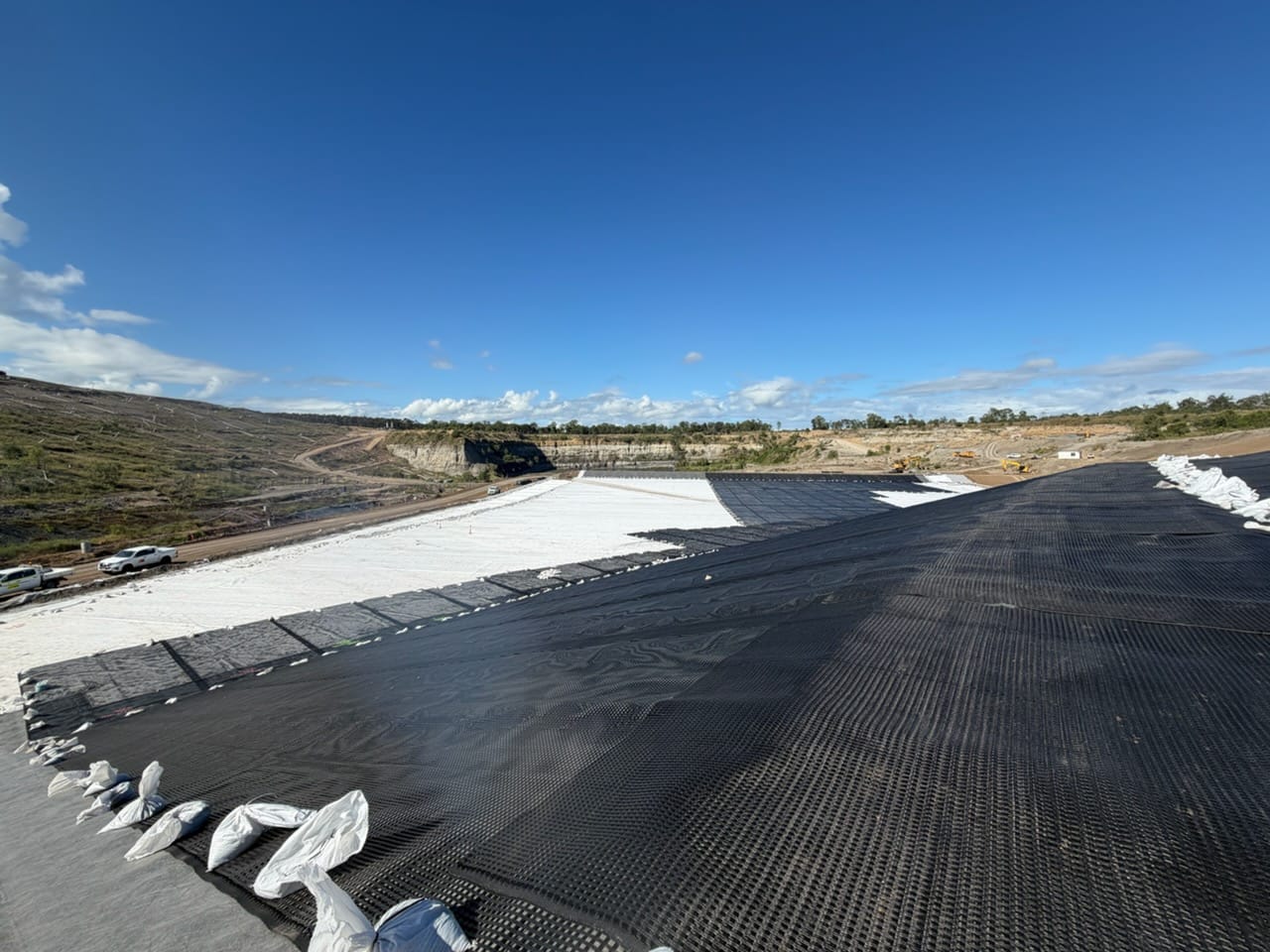
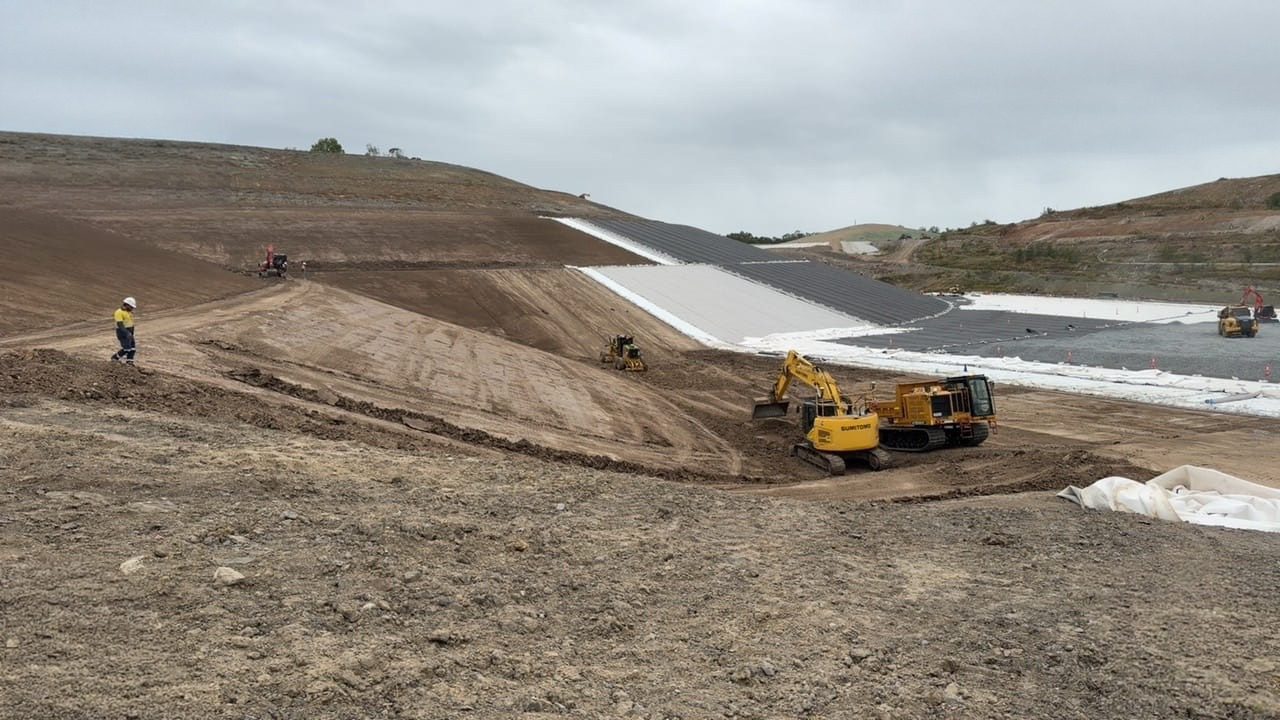
This project supports the Stage 2 expansion of Cell 8 at Ti Tree Bioenergy. The client requested a reinforced veneer system to maintain the stability of the cover soil throughout the landfill's design life. Ti Tree Bioenergy is an innovative bioreactor landfill in southeast Queensland, Australia. The facility repurposed a former open-cut coal mine void, approximately 36 million m³, into a sustainable waste management site while capturing landfill gas for renewable energy generation.
As part of the Stage 2 expansion, Cell 8 was designed to maximize disposal capacity within the available footprint by constructing high, steep perimeter embankments. However, the steep slope geometry increased the driving forces on the veneer soils and created the potential for progressive downslope movement. This movement could induce excessive tensile strain in the underlying geomembrane, compromising the long-term performance of the landfill containment system. The client therefore required a reinforced veneer system with sufficient tensile resistance to maintain the stability of the cover soils throughout the landfill's design life.
Cell 8 was constructed immediately adjacent to existing active landfill operations, with limited buffer space along the project boundary. Conventional measures such as flattening the slopes or widening the embankment footprint were not feasible, as they would have reduced disposal capacity and encroached on operational landfill infrastructure. The engineering challenge was further increased by the range of loading conditions acting on the veneer system throughout its service life. In addition to gravitational forces from the steep cover system, the reinforcement had to withstand operational loads from construction and maintenance equipment.
The bioreactor landfill operation further compounded project complexity. Continuous leachate recirculation accelerates waste degradation, resulting in greater, more rapid settlement than in conventional landfills. Consequently, the reinforcement system had to remain effective while accommodating progressive deformation over the landfill's service life. To address these engineering challenges, a high strength biaxial ACEGrid® geogrid was adopted as the primary veneer reinforcement. Securely anchored at the crest, the reinforcement mobilizes tensile resistance against downslope driving forces, reducing veneer displacement and minimizing tensile strain transferred to the underlying geomembrane liner. This solution enabled the construction of steep, high-capacity landfill embankments while maintaining long-term veneer stability without sacrificing landfill capacity.
The geogrid-reinforced veneer system successfully secured Cell 8’s capacity without changing slope geometry. Crucially, this solution maintained long-term stability under the rapid, significant biodegradation-induced settlement inherent in Ti Tree’s advanced bioreactor landfill technology, which uses continuous leachate recirculation to accelerate waste degradation. By preserving containment integrity during intensive decomposition, the project ensured uninterrupted, safe operations for both rapid waste management and green energy generation. This demonstrates a reliable stabilization method for modern bioreactor facilities facing space constraints and extreme operational settlement.
Content is submitted by the participant. ATA is not responsible for the content descriptions of the IAA award winners.
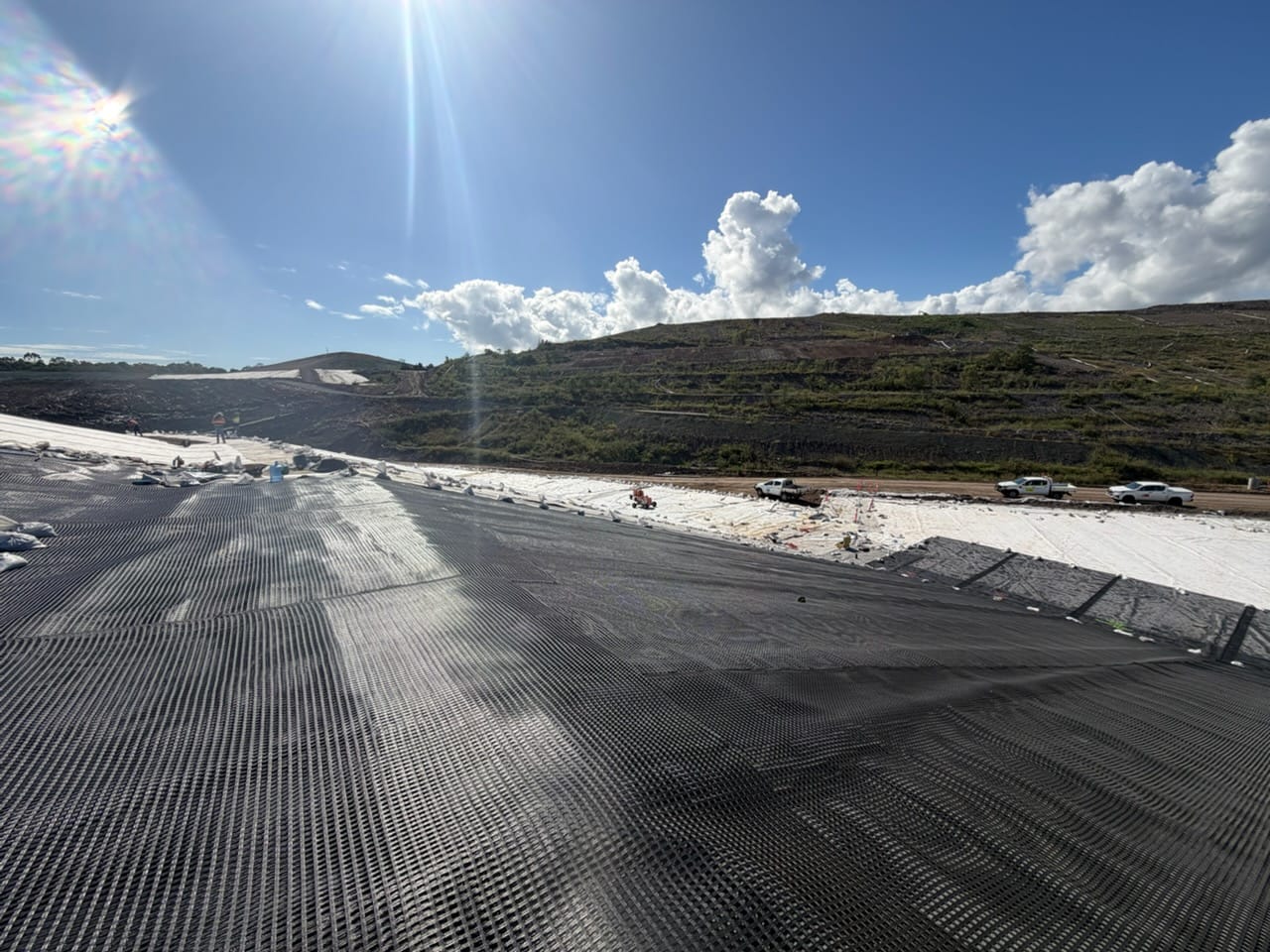
Construction of ACEGrid geogrid reinforced veneer system to support Cell 8’s Stage 2 expansion at Ti Tree Bioenergy, Australia