TEXTILES.ORG



Company:
Tasman Canvas ltd
Project Details
Fabric 1
Polyester webbing
Producer/Manufacturer:
Webbings and tapes
Primary Use:
Secondary Fabric
Fabric 2
Monotec 370
Producer/Manufacturer:
Shade Systems make
Primary Use:
Main Fabric
Design Name
Nik Neale
Design Company
Isthmus.
Please describe the project specifications
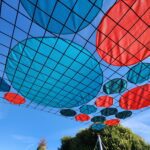
We were approached to develop techniques for creating a shade structure in a themed iwi led play space in Wakatu Nelson. The concepts were fully developed by design group Isthmus and reflected the storyline they were working with. The design concepts were unprecedented and had some serious challenges to create in the real world. The design called for various sized shade circles caught in a netlike structure to represent a fishing net. Whilst we looked at actual fishing net options these were just too literally like fishing nets to be suitable and didnt create the right impression, which was unfortunate as fabricating the equivalent symbolic representation was going to be epic.
The techniques we developed had to be able to be scaled up for the manufacturing of large shade areas to be installed in the actual play space.
We needed to collaborate with multiple agents involved in project, the design group, the project co-ordinator, the structural engineer, and the site contractor.
Initially we trialed various products to imitate the fishing net and then various joining/fabricating methods to create the grid work. We trialed mechanical joints such as staples, hog rings and other clips, none of which were sufficient or durable enough. We then trialed chemical joining methods with various glues and welding methods, these also proved either not durable enough or not efficient enough to scale up.
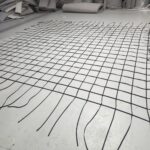
We settled on using a UV stabilised polyester webbing from Webbings and Tapes ltd after discussions with John Smart regarding the best options. We trialed hand sewing and although this was durable in test samples it was not efficient enough for the 625 crossings for the 5m x5m prototype and certainly not the approximately 7600 crossings when it comes time for the production shade.
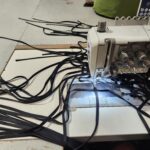
We had been attempting to perform the joining once the gridwork had been laid out on the floor to avoid having to bring the webbing tapes to the sewing machine to join as this creates the opportunity to get the whole arrangement into a bird's nest in and around the sewing machine. Having exhausted our options, it was time to take a deep breath and try using the machine to do the job. We have Durkopf Adler 867 classic sewing machines and with the sewing machine set up with auto back tacks and with the auto cut trimming knifes on and a hybrid kayak skirt around the operator to stop all the webbing falling into the sewing machine pit the slow process of manually creating a simulated net structure was underway.
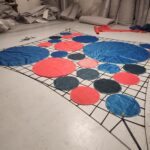
Although we had been dreading doing this it actually was quite achievable, at least at this scale. Once we had the basic grid manufactured, we laid it out under tension and marked the catenary curves into it and formed the grid ends around a 6mm perimeter polyester braid. We will use a larger diameter dyneema braid in the final version. The braid was spliced into terminal rings which were then tensioned up on the floor with turnbuckles. Once the grid matrix was firm, we then started applying the various sized [.5m ,1m, 1.5m ,2m] shade cloth circle to the grid work. We had already hemmed these and trialed various methods of stiffening the edges.
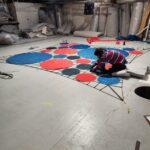
These were pinned out onto the floor and then hand sewn with heavy thread and locked with superglue.
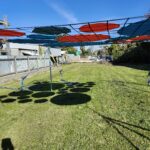
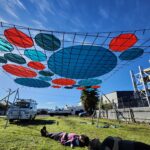
We were then able to take it out into the field for a trial using temporary steel poles, truck tiedowns and heavy-duty pegs to get the required tension. The trial went well and created the desired shade outlines as requested by the design company.
At this stage the project is awaiting full approval prior to production, however the process of working to a design specification created in the dream world of design artists was a satisfying creative experiment that stretch the known parameters of shade creation.
What is unique or complex about the project?
Our company was invited to submit our interest along with other local fabricators in our area. Another company had been approached earlier but had not satisfied the project leads with their input. We indicated our interest and had a meeting with the project leads.
We suggested a prototype stage prior to production to prove the solution was fit for purpose.
Our company was chosen to lead the shade element of the overall project, and we were required to provide an indicative budget of the prototype stage and also of production. Experience was vital at this stage as without a defined fabrication process, we had very little data to base this on.
As a multiple stake holder project, we had to win the confidence of all the parties.
Our previous award winning projects were refenced to give confidence to the project leads.
The overall scale of the project and the public exposure really required serious consideration about the repeatability and the durability of the choices we made.
Content is submitted by the participant. ATA is not responsible for the content descriptions of the IAA award winners.
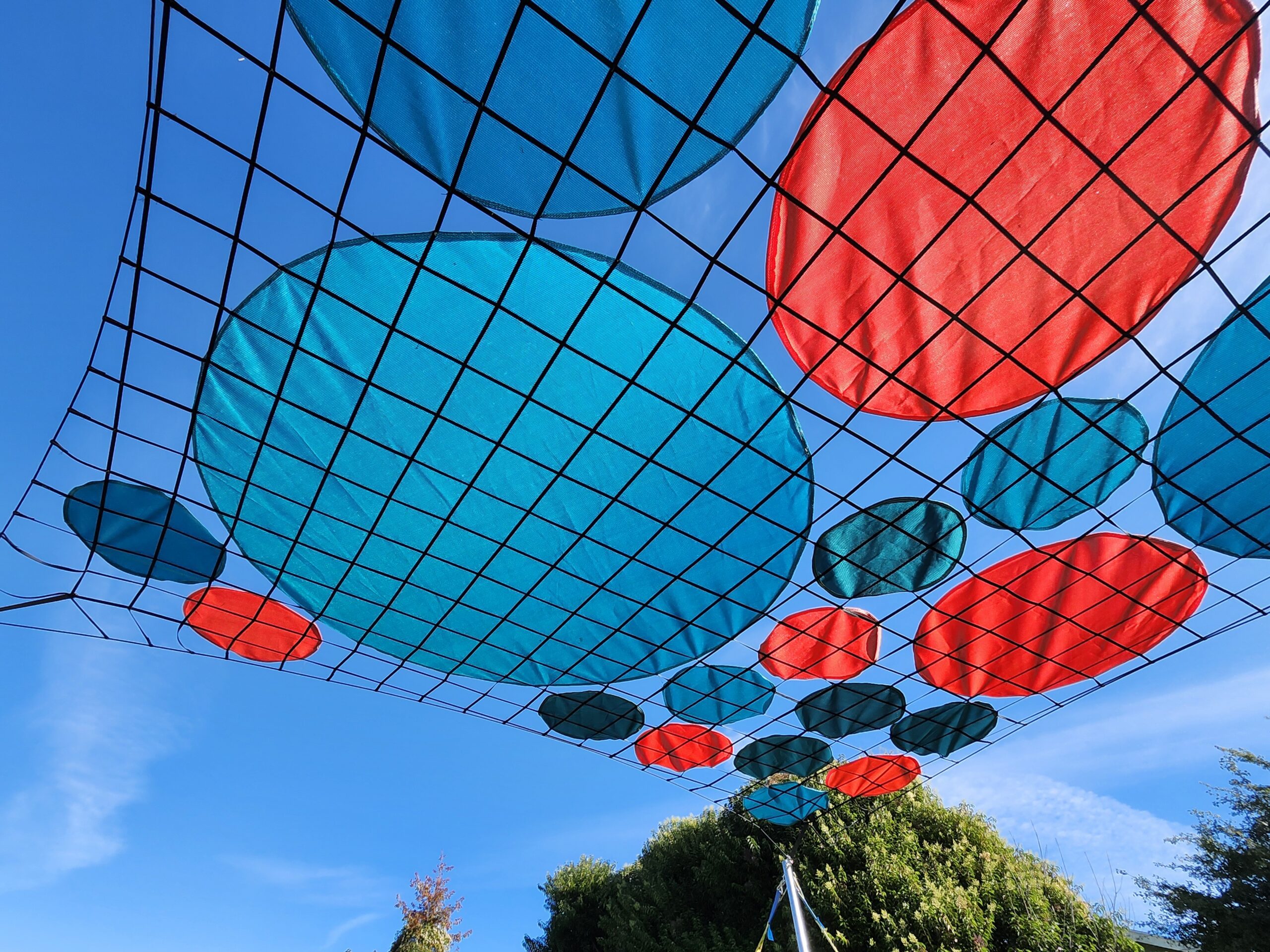
Prototype shade outdoor trial
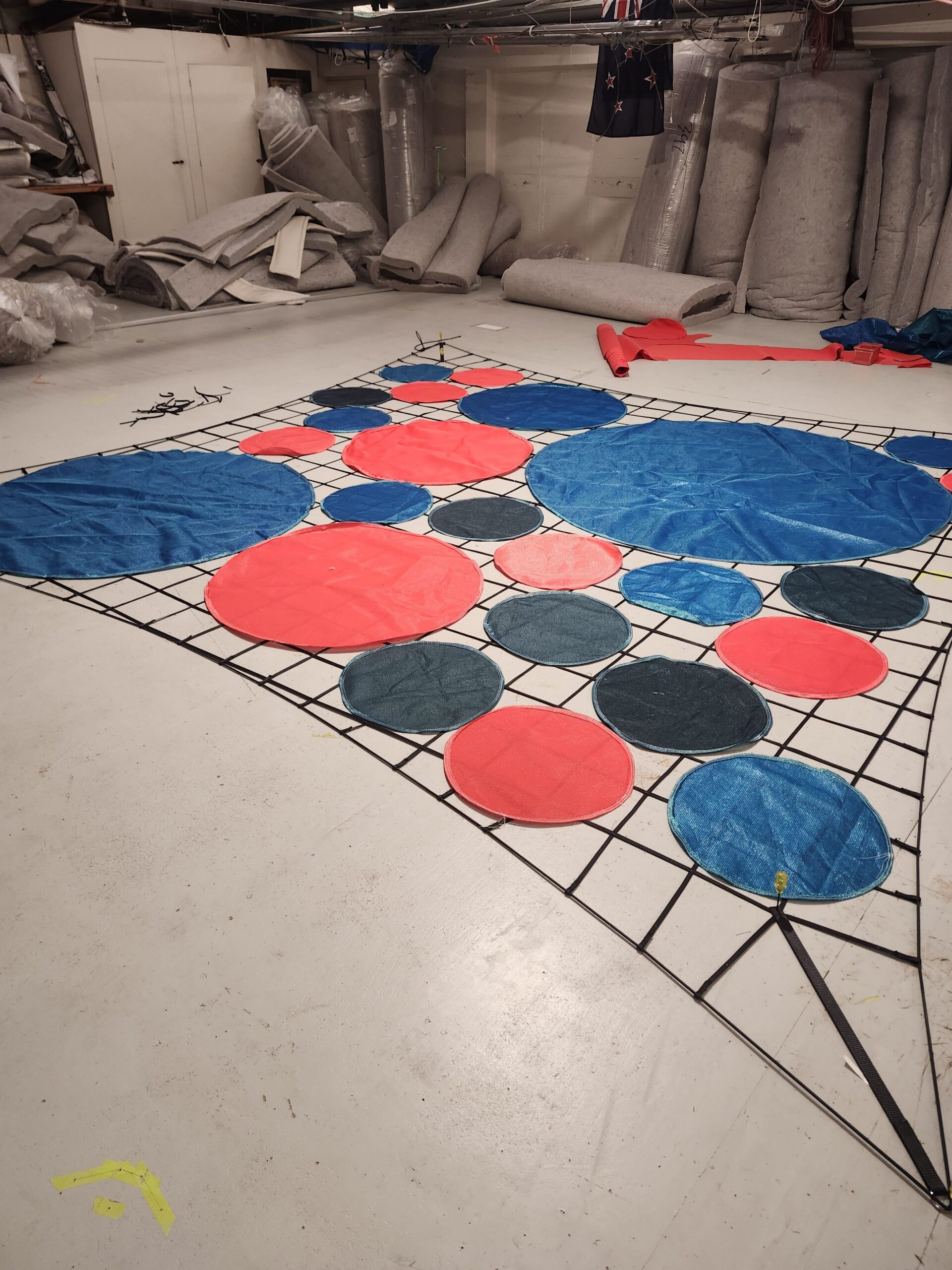
Prototype sail on the bench
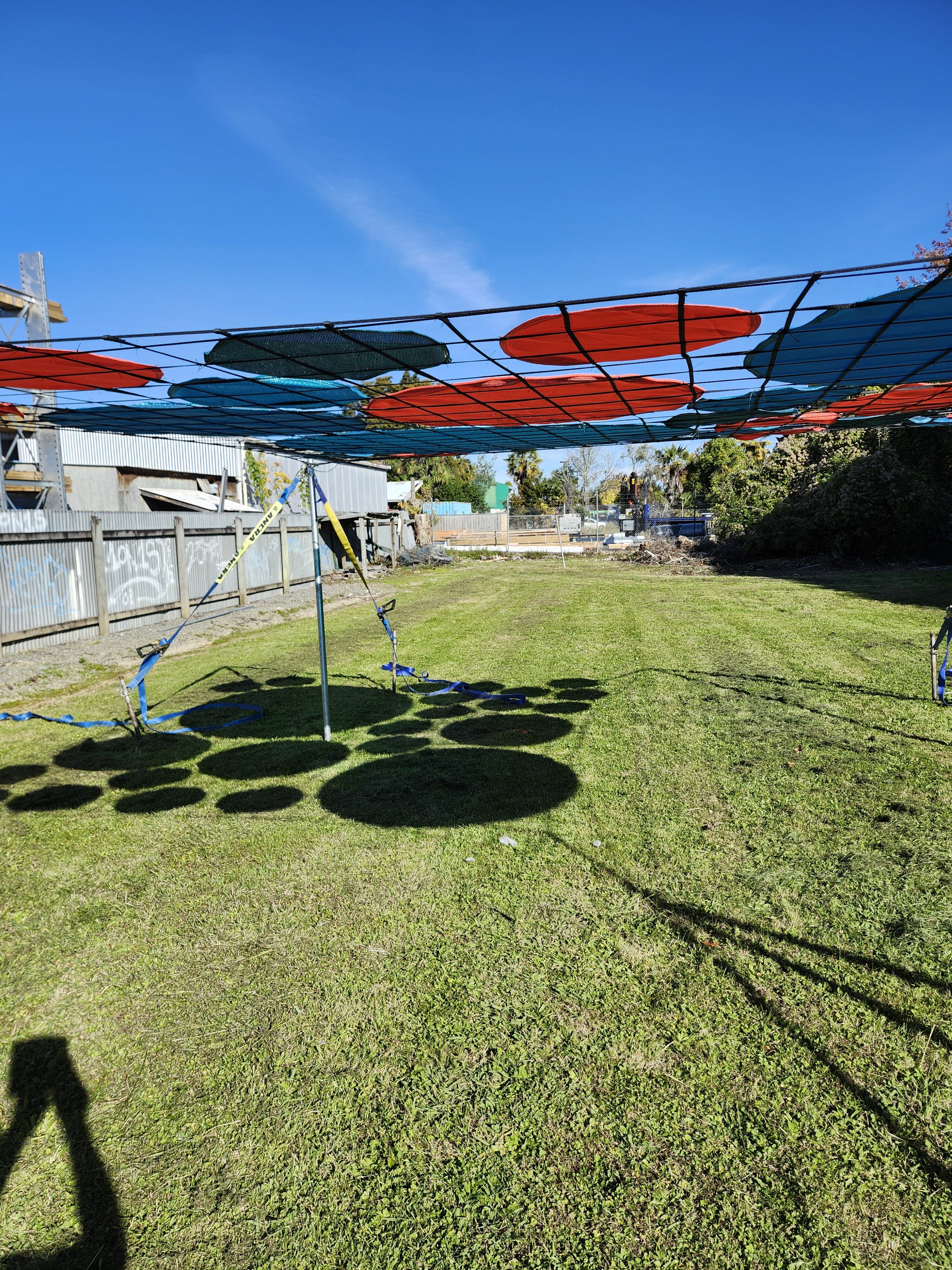
Shade pattern study
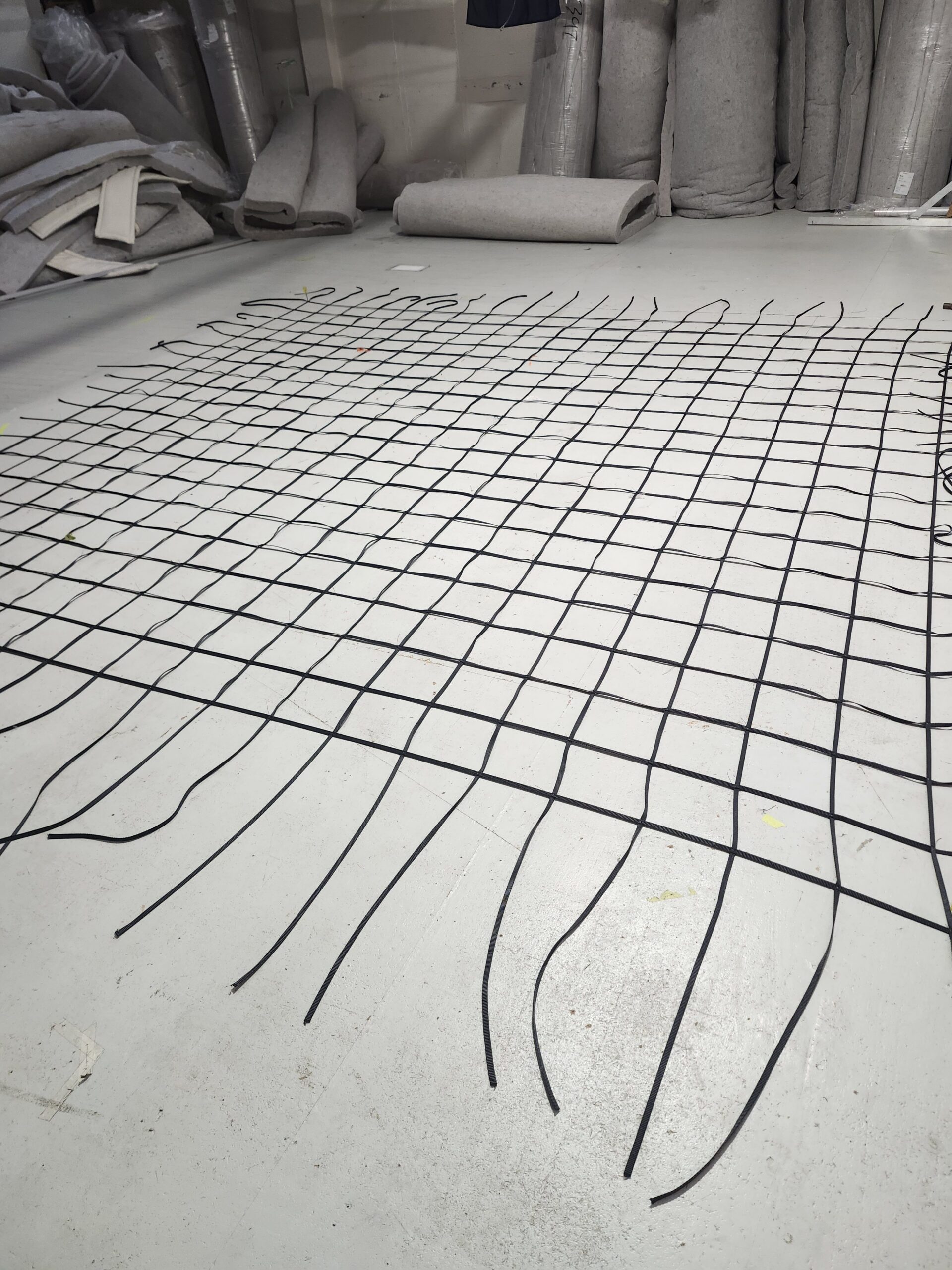
webbing grid
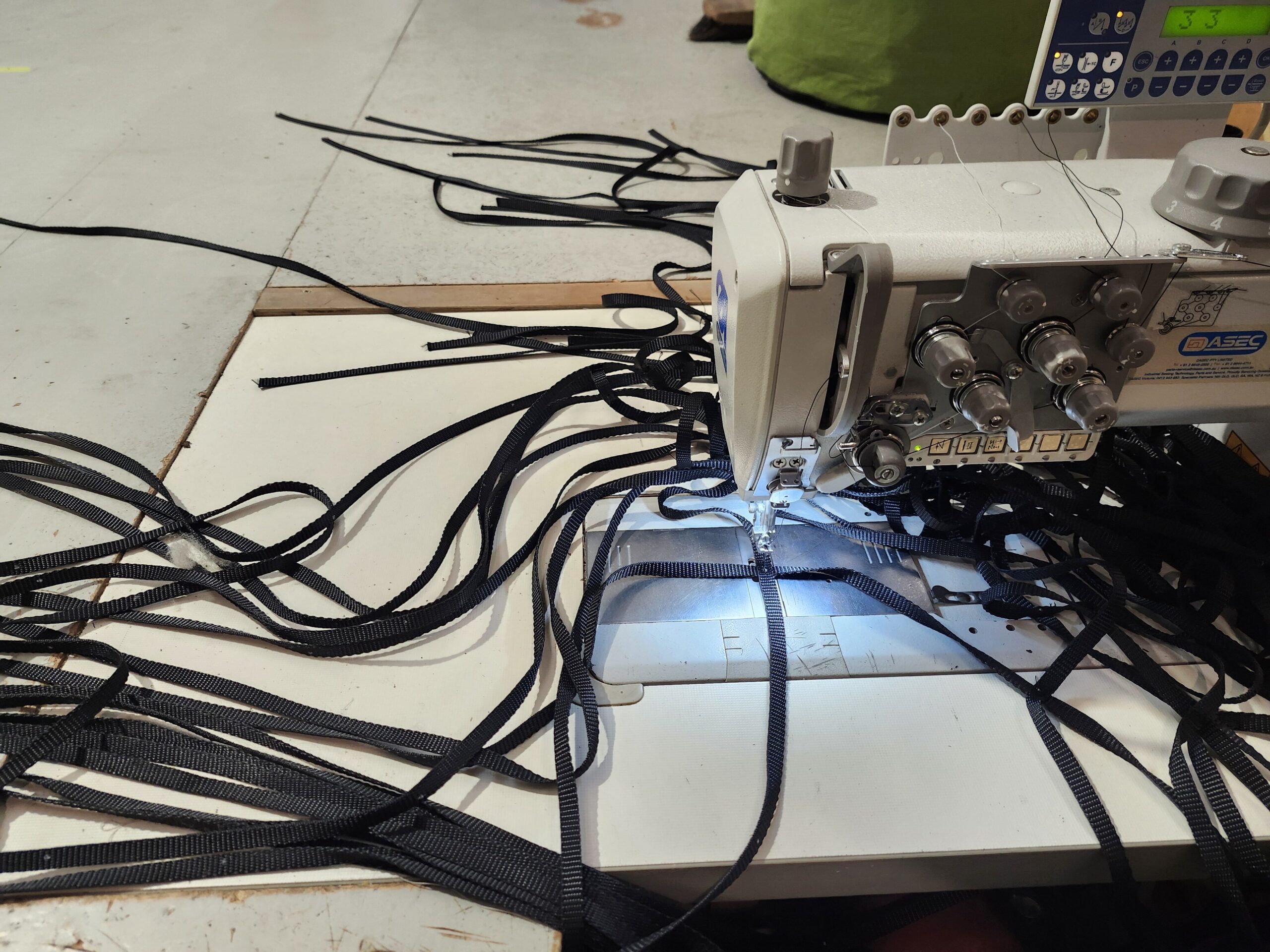
construction webbing crossings
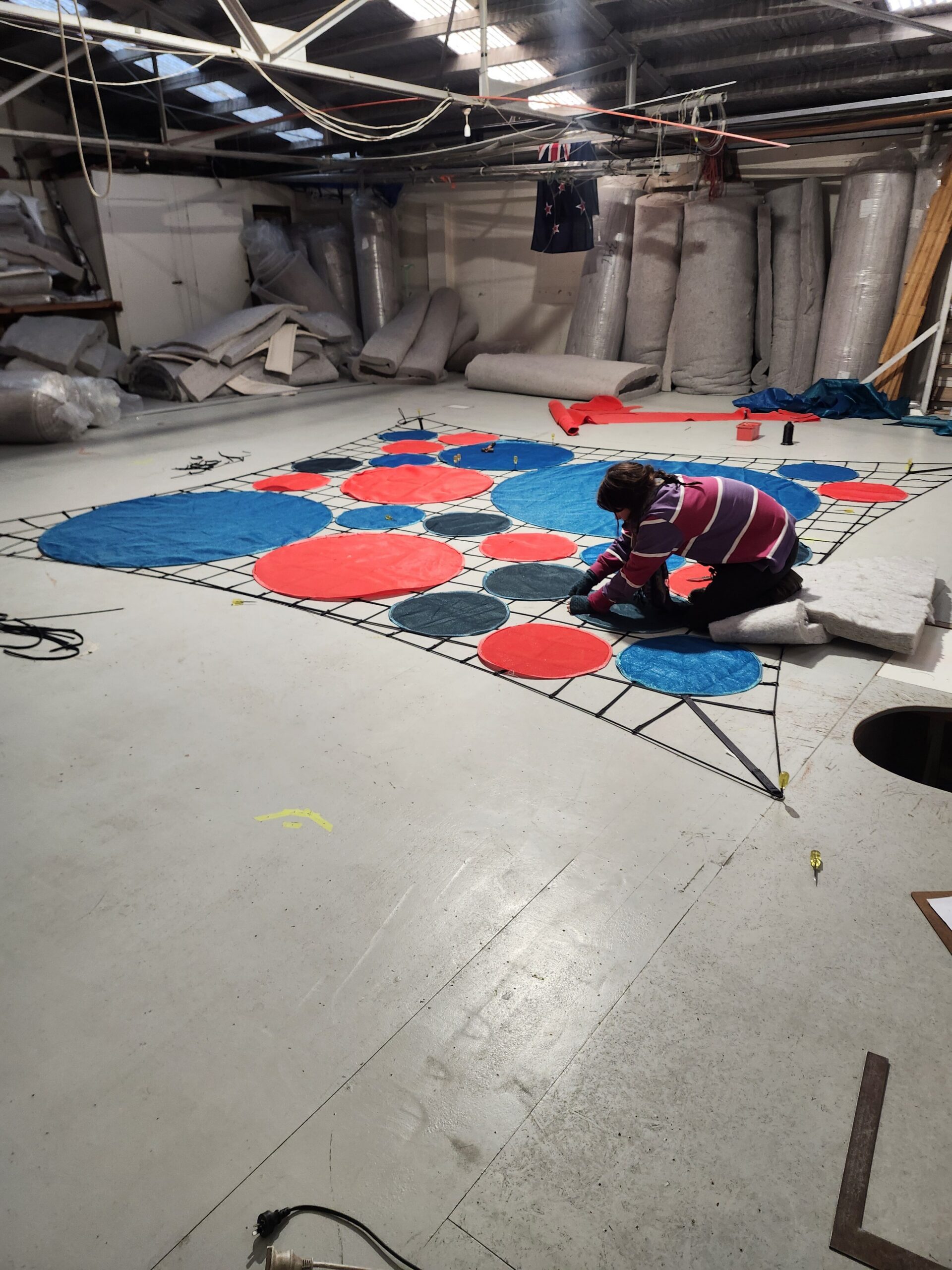
attaching circles
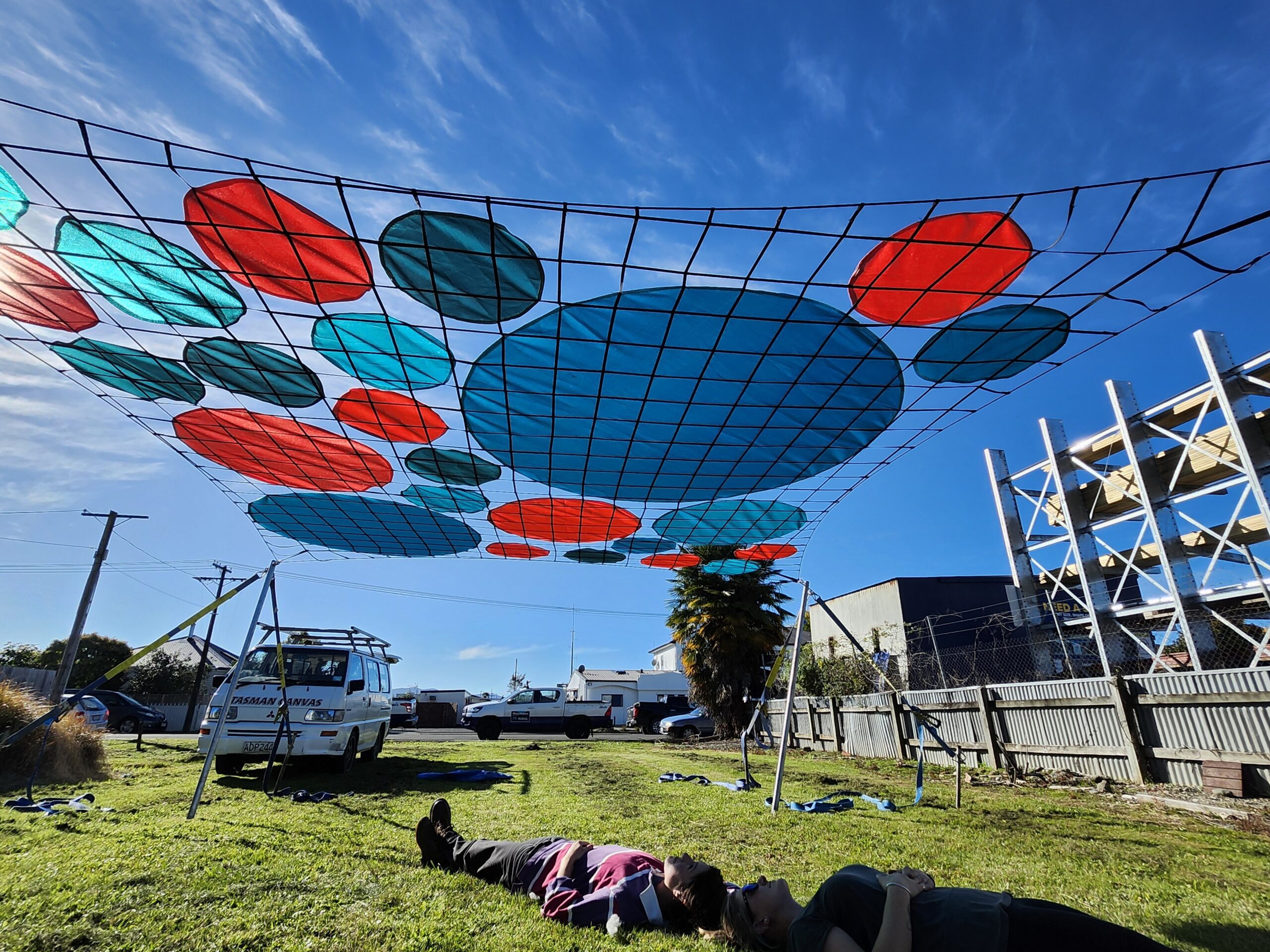
staff on the job