TEXTILES.ORG



Company:
ACE Geosynthetics Inc.
Project Details
Fabric 1
ACETube® PP250-II 36 meter in circumference
Producer/Manufacturer:
ACE Geosynthetics Inc.
Primary Use:
Main Fabric
Fabric 2
ACETube® PP250-II 28 meter in circumference
Producer/Manufacturer:
ACE Geosynthetics Inc.
Primary Use:
Main Fabric
Fabric 3
ACETex® non-woven geotextile
Producer/Manufacturer:
ACE Geosynthetics Inc.
Primary Use:
Secondary Fabric
Please describe the project specifications
1. What was the purpose of this project? What did the client request?
This project was located at a port on Taiwan’s west coast. In response to port expansion requirements, a new pier was required. The original design for the temporary cofferdam specified a riprap-mound embankment. However, due to the tight construction schedule, limited availability of local quarry stone, and related logistical challenges—including longer transportation distances, higher procurement and haulage costs, and environmental impacts such as air pollution and noise—the designer proposed alternative solutions.
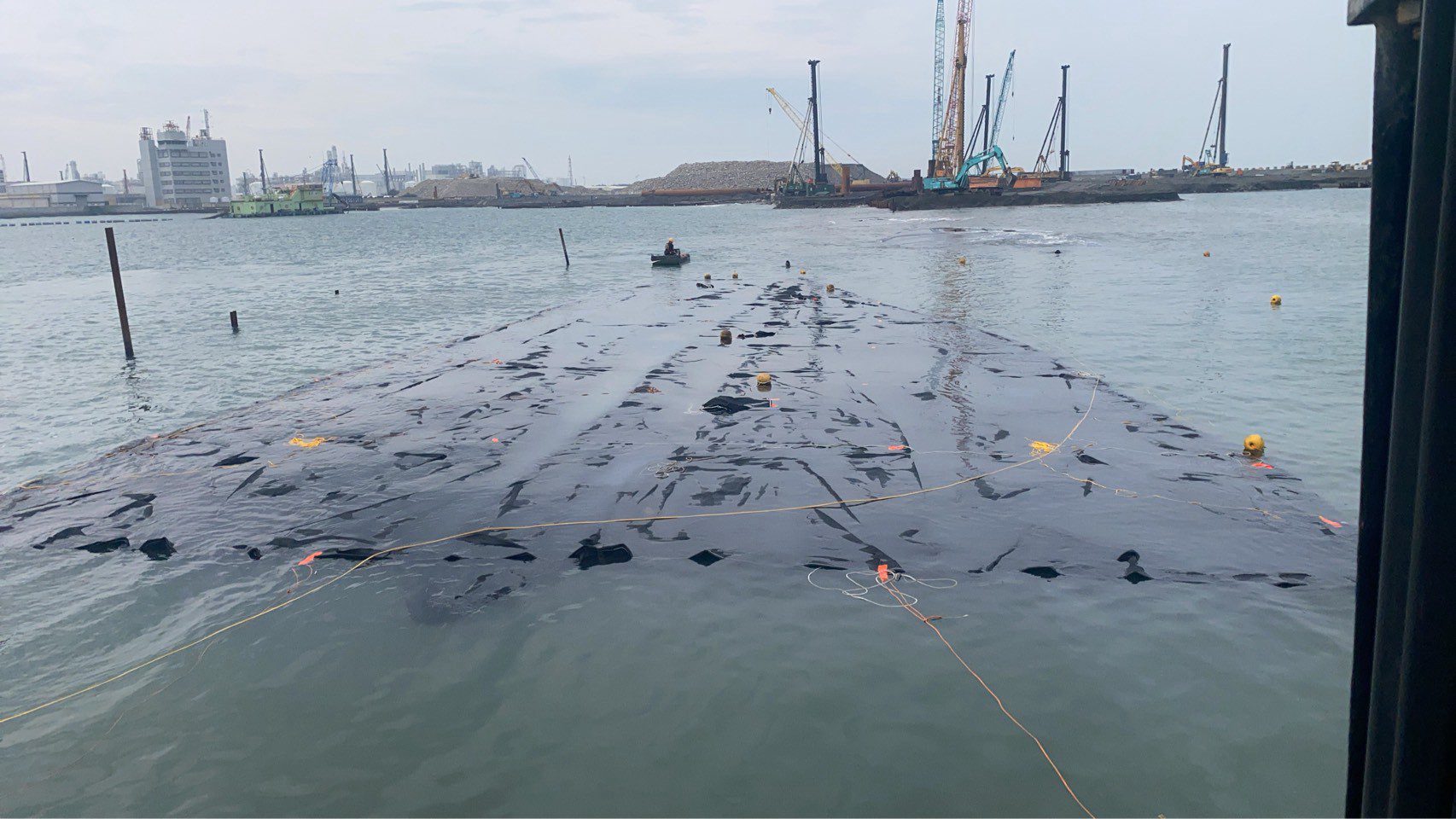
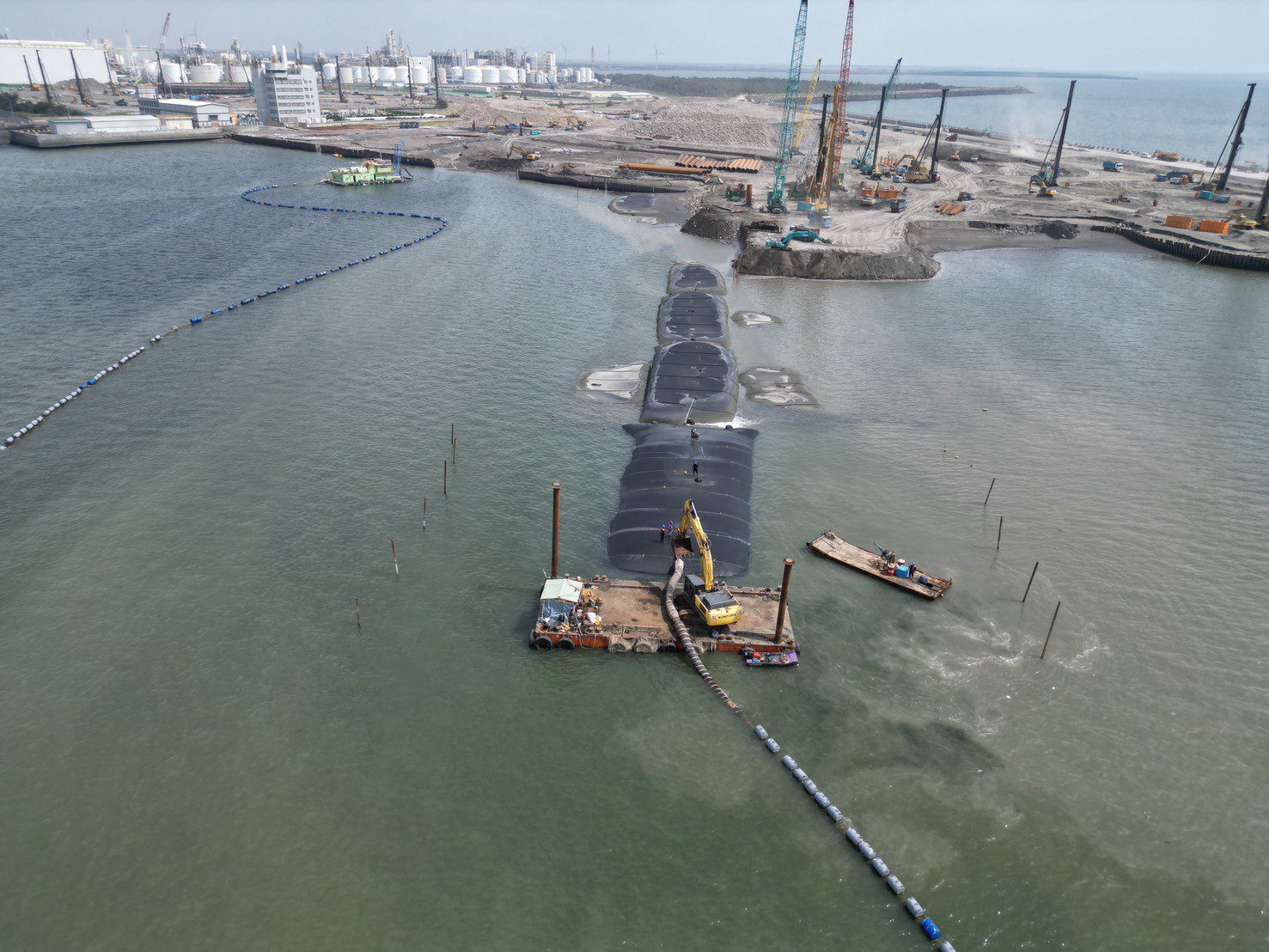
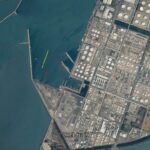
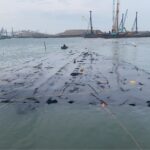
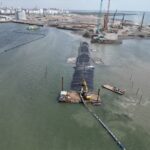
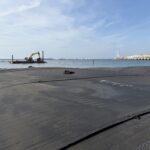
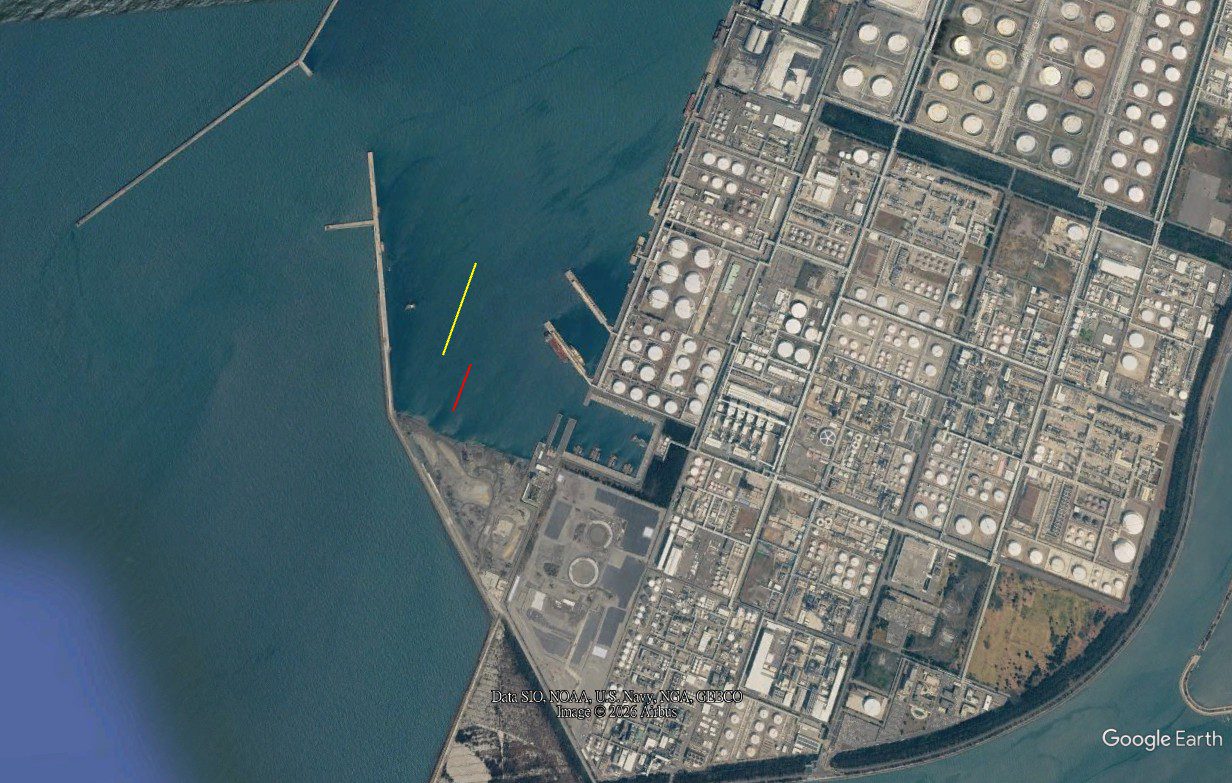
Based on a comprehensive assessment of schedule adherence, cost efficiency, and carbon emission reduction potential, the project owner decided to adopt the geotextile tube method for cofferdam construction. Dredged silt from the northern side of the existing pier was used as fill material and placed to construct earthen embankments on the southern side. Two embankments, 200 m and 400 m long respectively (Figure 1), were planned for installation in water depths ranging from −7 m to −11 m with a total structural height of approximately 9.5 m. Geotextile tubes made of ACETube® PP250-II , with circumferences of 36 and 28 meter were adopted for the project.
2.What is unique or complex about the project?
This project encompasses both temporary and permanent applications of geotextile tube technology. In Area A, adjacent to the existing pier, the geotextile tubes primarily serve as temporary cofferdams, safeguarding the southern steel sheet-pile structure against seawater erosion and mitigating sand loss during subsequent backfilling operations. To ensure structural integrity and hydraulic stability, a multi-layer stacked configuration was adopted.
In contrast, Area B constitutes an extension of the new pier and represents a permanent infrastructure component. Following seabed leveling through rock dumping and foundation improvement, geotextile tubes were integrated as core structural elements of the breakwater system, with an external protective armor layer installed over them. The designer adopted high-strength geotextile fabric for the geotextile tubes and ACETex® nonwoven geotextile for foundation separation. Structural design parameters, including tube diameter and geotextile tensile strength, were evaluated using the specialized geotechnical analysis software GeoCoPS.
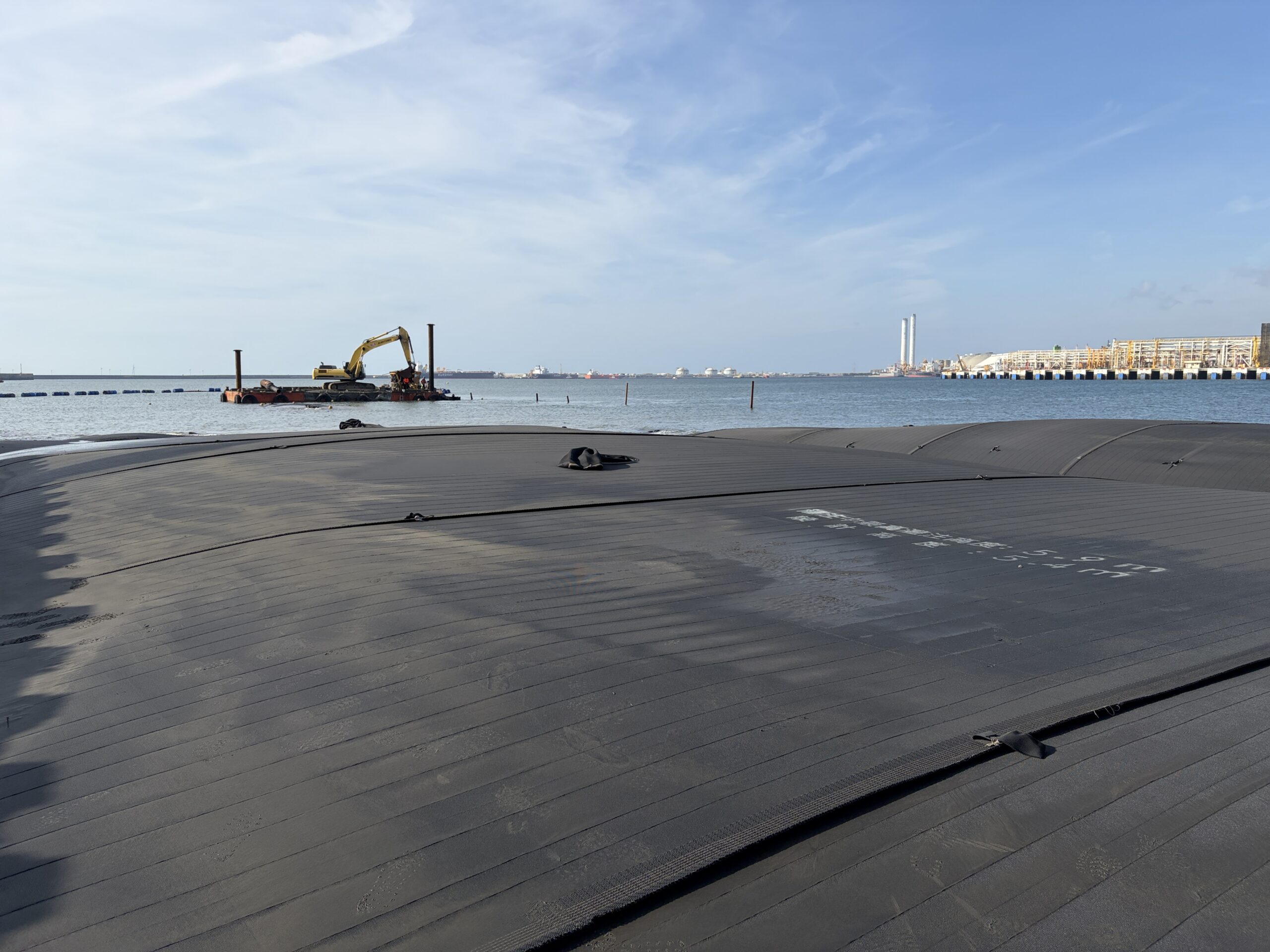
Considering a tube circumference of 36 meter and adequate fabric strength, numerical modeling indicated that the tube can be successfully filled to a submerged height of 5 m. A two-tier 1+2 pyramidal stacking arrangement effectively replaced the conventional soil-based breakwater surface. Upon consolidation, the stacked tube assembly attained an approximate total height of 7.5 meter; an additional 2 meter thick rock armor layer was then placed a top to achieve the final design elevation.
The challenging marine working environment, including tidal fluctuations, turbulent currents, and limited underwater visibility, significantly increased the difficulty of positioning and installing the geotextile tube. Therefore, a professional diving team must carefully and fully collaborate with the work vessels to accurately position and lay the geotextile tubes. Due to the large volume of material in each tube, the distance for silt extraction, and energy loss from elevation differences, the construction crew deployed two sand-dredging vessels each with a capacity exceeding 1,000 horsepower to take turns extracting and filling dredging material. The dredging vessels continuously extracted silt from locations approximately 20 m to 2 km from the construction area and transported it to the site. The geotextile tubes were filled progressively and intermittently to prevent localized bulging or deformation, thereby ensuring that each tube achieved a uniform design cross-section and satisfied the specified structural requirements.
3. What were the results of this project?
This project replaced the traditional rock-riprap cofferdam with large-scale geotextile tubes, yielding a relatively stable overall structure. The filling material consisted of silt dredged from the estuary, which was backfilled into the geotextile tubes to serve as both temporary cofferdam and permanent breakwater for the newly constructed piers. This practice effectively repurposed the previously wasted silt, not only accelerating project progress but also reducing energy consumption during stone quarrying, material transportation, and construction. Consequently, it significantly lowered carbon emissions, air pollution, and construction noise, fully aligning with the concepts of circular economy and sustainable engineering. This project applied large geotextile tube technology in marine engineering, drastically shortening construction time while maintaining safety. Replacing a large quantity of rock with local unwanted silt substantially reduced engineering carbon emissions. As Taiwan advances toward its 2050 net-zero emissions goal and promotes sustainable coastal development, this project of temporary coffer dam was completed on schedule in early 2026 and provided a concrete, successful demonstration of innovative practices. The overall project is still underway.
Content is submitted by the participant. ATA is not responsible for the content descriptions of the IAA award winners.
ACE Geosynthetics Inc.