TEXTILES.ORG



Company:
Wholesale Shade
Project Details
Fabric 1
Commercial NinetyFive
Producer/Manufacturer:
Gale Pacific USA Inc.
Primary Use:
Main Fabric
Design Name
Steef Crombach & Priscilla Lustig
Architect Name
Steef Crombach & Priscilla Lustig
Fabrication Name
Wholesale Shade
Project Manager Name
Steef Crombach & Priscilla Lustig
Installation Name
Steef Crombach & Priscilla Lustig
Please describe the project specifications
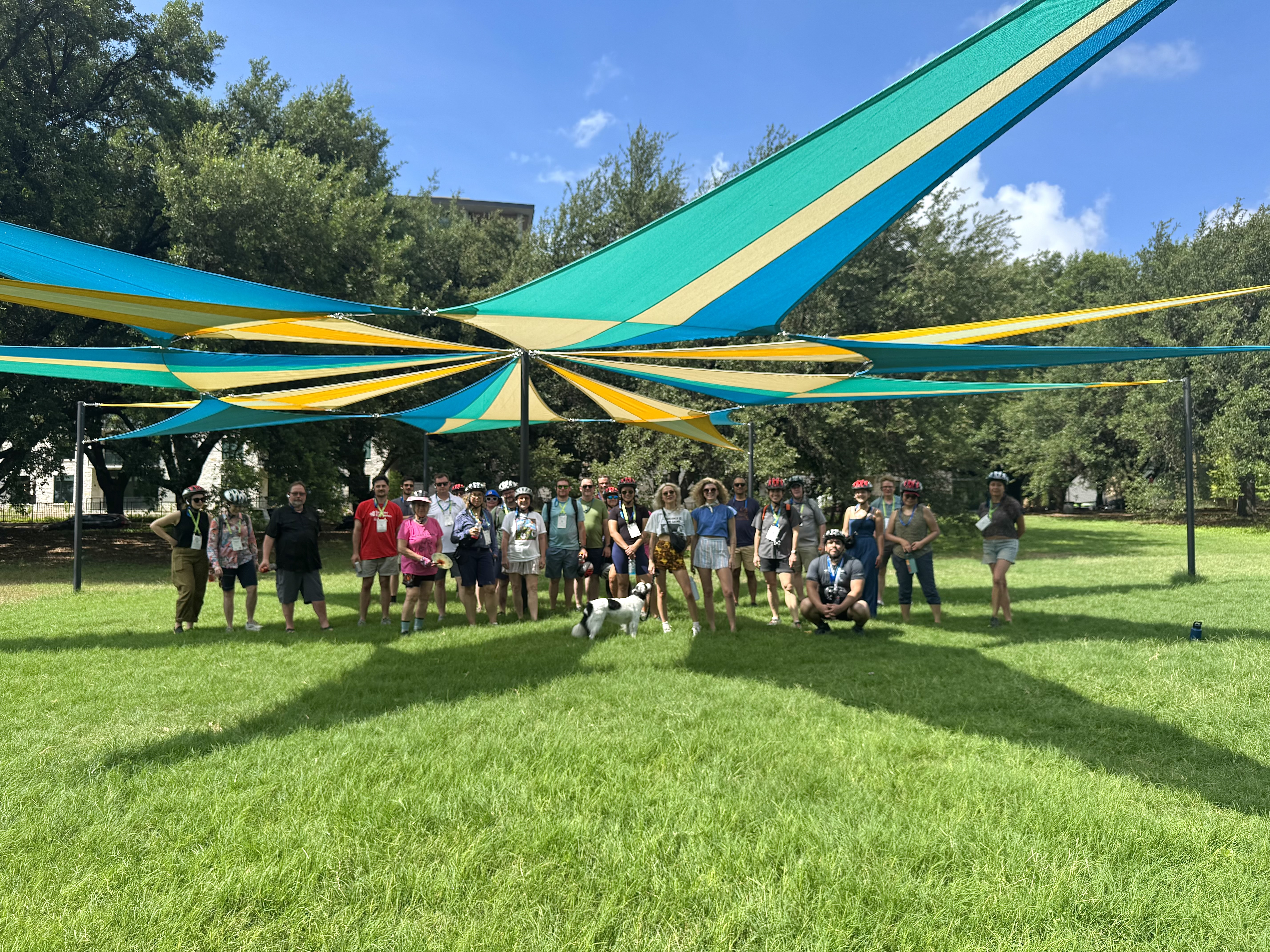
Cazimi, designed by artists Steef Crombach and Priscilla Lustig for the City of Austin, Texas and The Trail Conservancy, is a shade canopy conceived as both functional infrastructure and a site-specific work of art. The artists approached the 1,750 square foot structure as a three-dimensional composition in which color, pattern and light work together to create a new gathering place within the park.
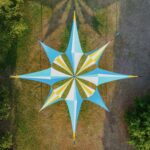
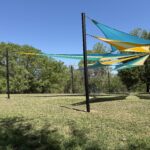
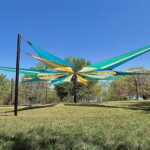
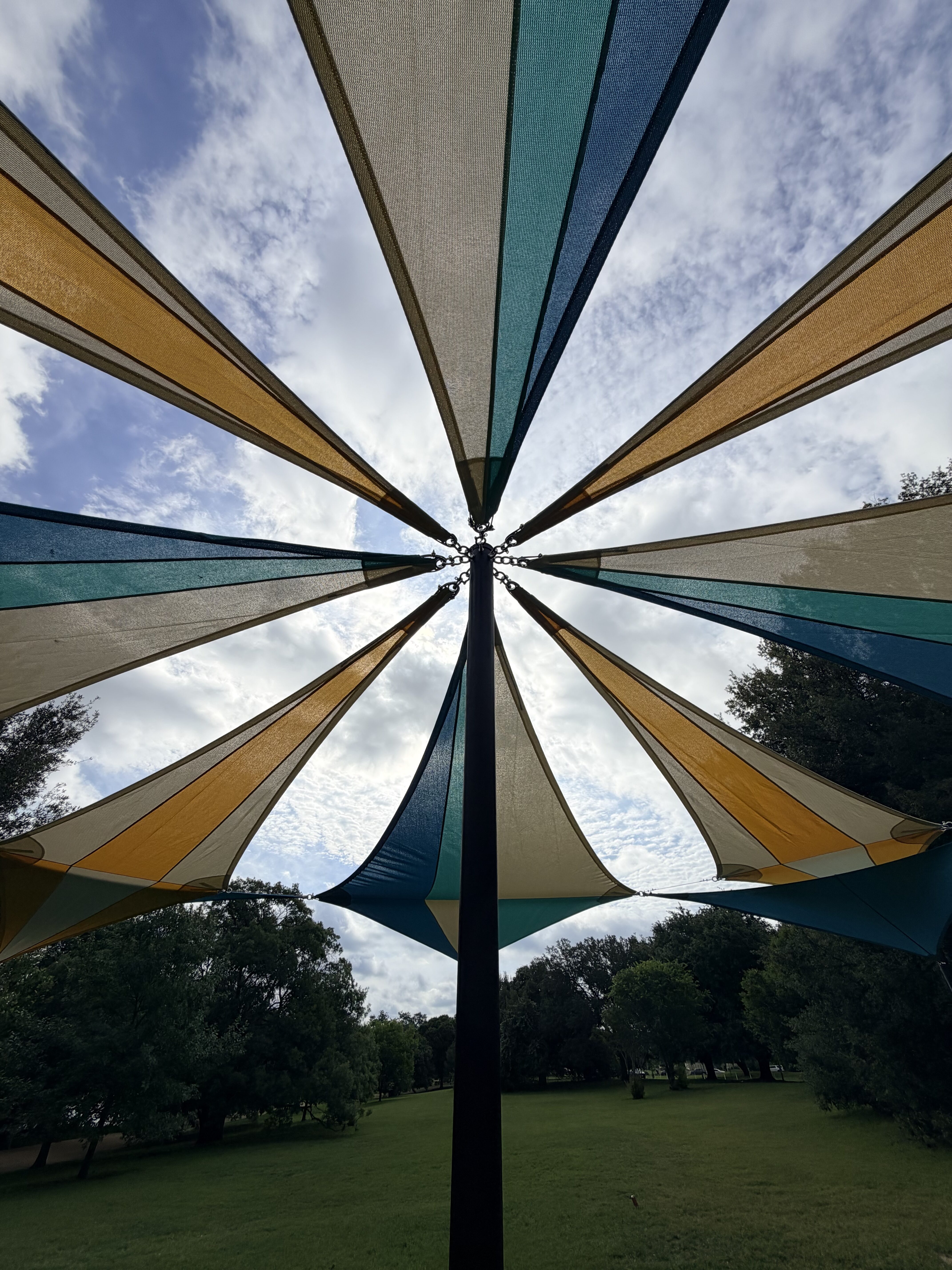
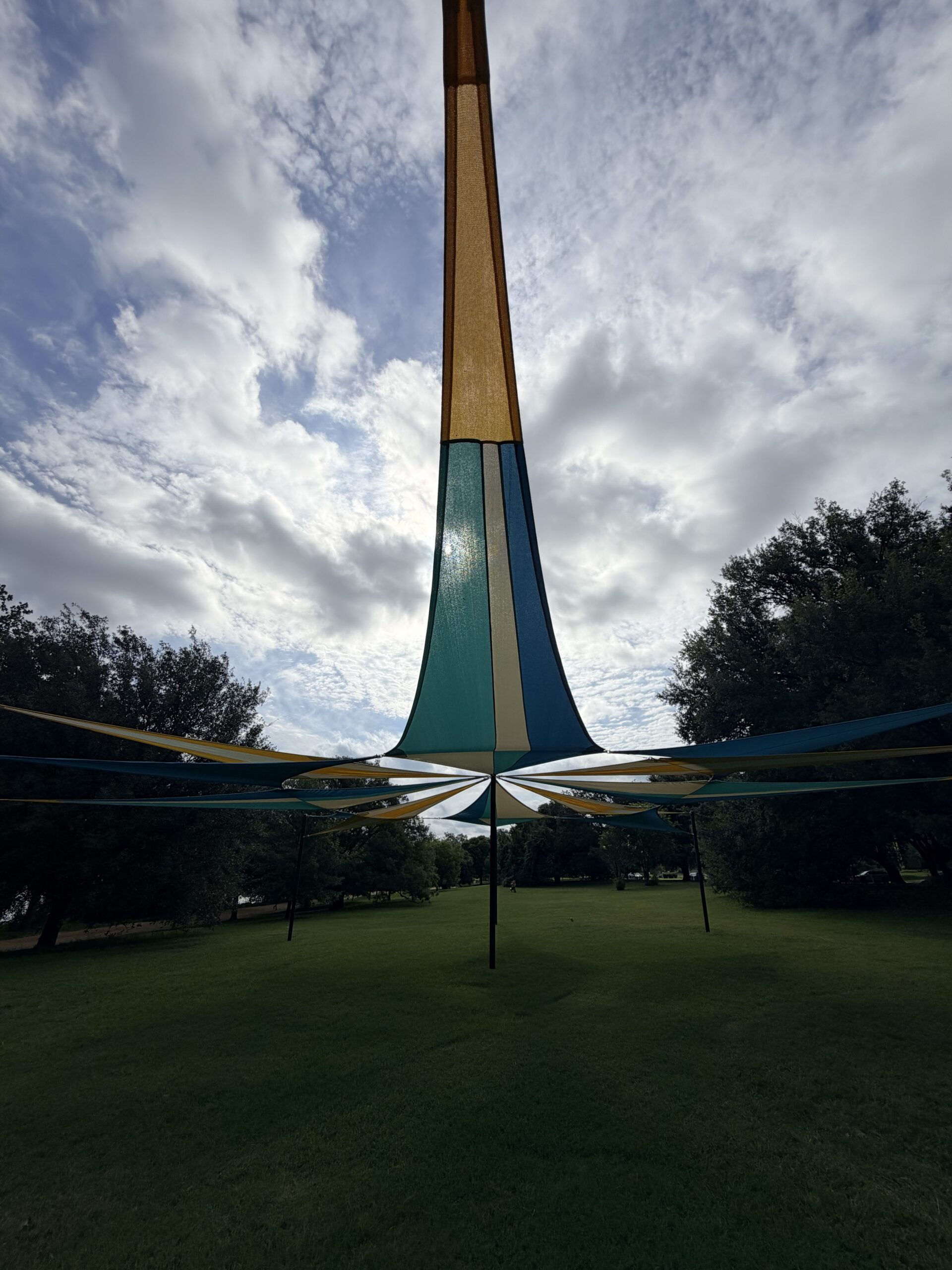
The canopy is composed of 12 individual triangular and diamond shaped panels, ranging from approximately 12.2’ × 10’ to 32.5’ × 10’. Each panel is constructed in a quilt-like configuration, combining planes of Gale Pacific Commercial 95 fabric in Blue Bird, Natural, Yellow, and Aquamarine. Individual panels contain as many as seven separate color planes and up to four colors within a single sail. This approach draws from the visual and material language of quilting, where individual pieces of fabric, color, and pattern are assembled into a larger whole. Here, that craft tradition is translated into a large-scale architectural application: each sail becomes its own composition while also contributing to the larger canopy.
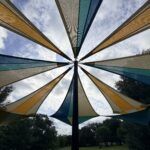
The quilting reference is not simply decorative. It reflects the artists’ interest in how distinct pieces can retain their individual character while becoming stronger and more meaningful through connection. The four-color palette shifts between panels, creating a sense of rhythm and variation across the canopy rather than repeating a single graphic pattern. As the pieces overlap, the colors meet, separate, and reappear, creating new relationships that change depending on where a visitor stands beneath the structure.
What sets Cazimi apart is the way these panels extend beyond a conventional post-to-post shade configuration. The panels are interwoven and interlocked across their width, passing over and under one another at intervals and becoming structurally interdependent. Each panel is supported lengthwise between the steel posts while simultaneously engaging with the panels around it. From above, the resulting configuration forms a star- or compass-like composition; from below, the overlapping planes create an immersive field of color, geometry, shadow, and changing light. The dimensional layering gives the impression that the individual sails are floating and weaving through one another rather than simply being stretched across a support structure.
The artistic concept began with the site itself. The Trail Conservancy and City of Austin sought to provide shade and places to gather, while also encouraging site-specific art that could strengthen visitors’ connection to the Trail’s natural environment. Community input identified shaded areas, gathering spaces, recreation, nature, and opportunities to pause and enjoy the park as important priorities. Cazimi responds to those needs by making shade itself the main character of the artwork: a place to meet, rest, look upward, and experience the park comfortably.
The canopy is precisely oriented to the true north, south, east, and west directions, turning its geometry into both a visual composition and a subtle instrument of orientation. Cazimi, means “in the heart of the Sun,” and reflects the artists’ interest in the relationship between celestial movement and earthly experience. As the sun moves throughout the day, the layered fabric produces shifting patterns of light and shadow across the ground.
The result is a shade structure that operates simultaneously as shelter, gathering space, and artwork. Its bold color, quilting-inspired composition, unusual interwoven construction, and changing relationship to sunlight transform a familiar shade-sail typology into something more architectural and sculptural. Cazimi demonstrates how specialty fabric can move beyond the purely utilitarian to become an expressive part of public space, providing comfort while giving visitors a reason to stop, gather, and look up.
Content is submitted by the participant. ATA is not responsible for the content descriptions of the IAA award winners.
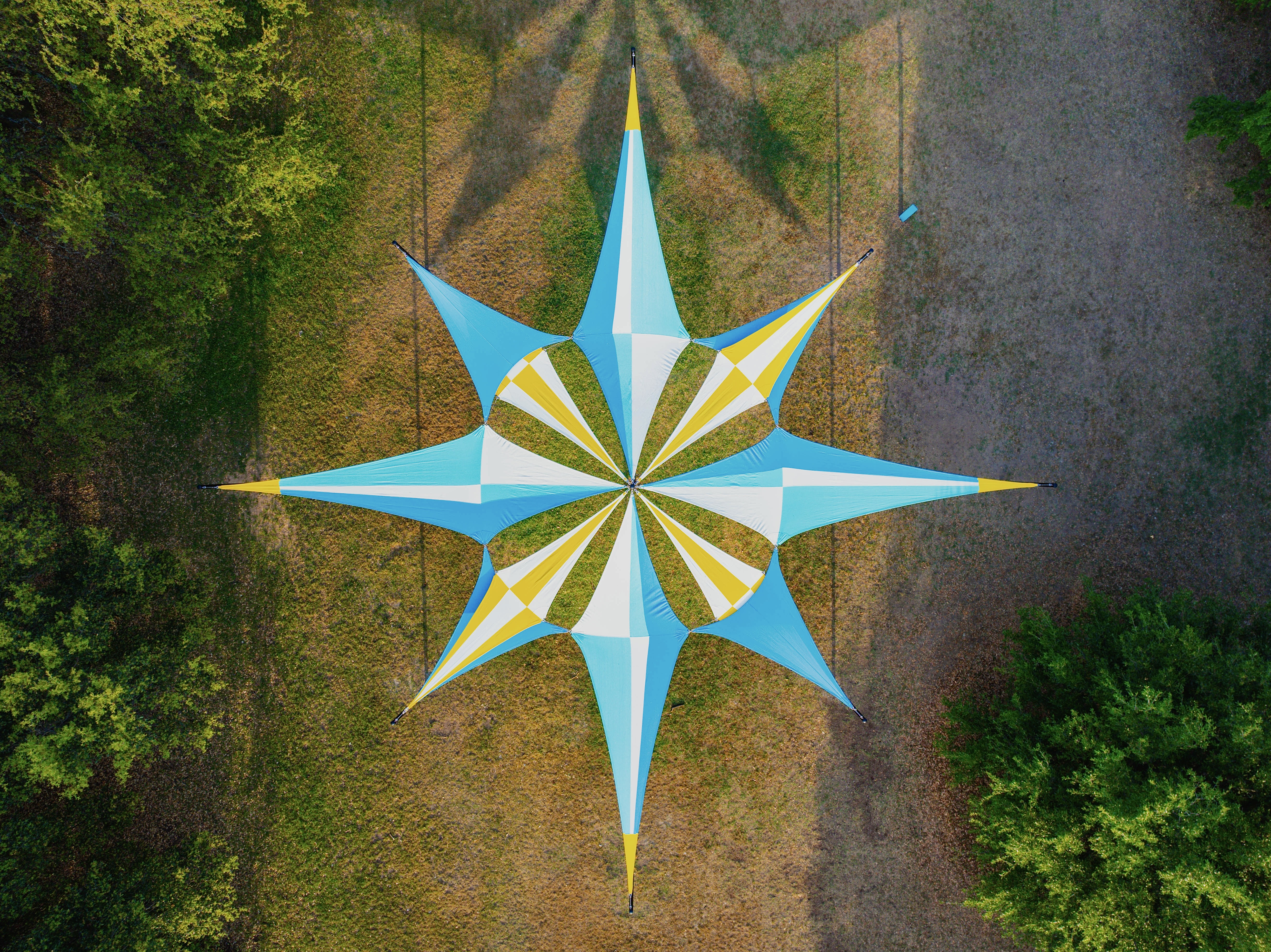
Priscilla Lustig, Steef Crombach
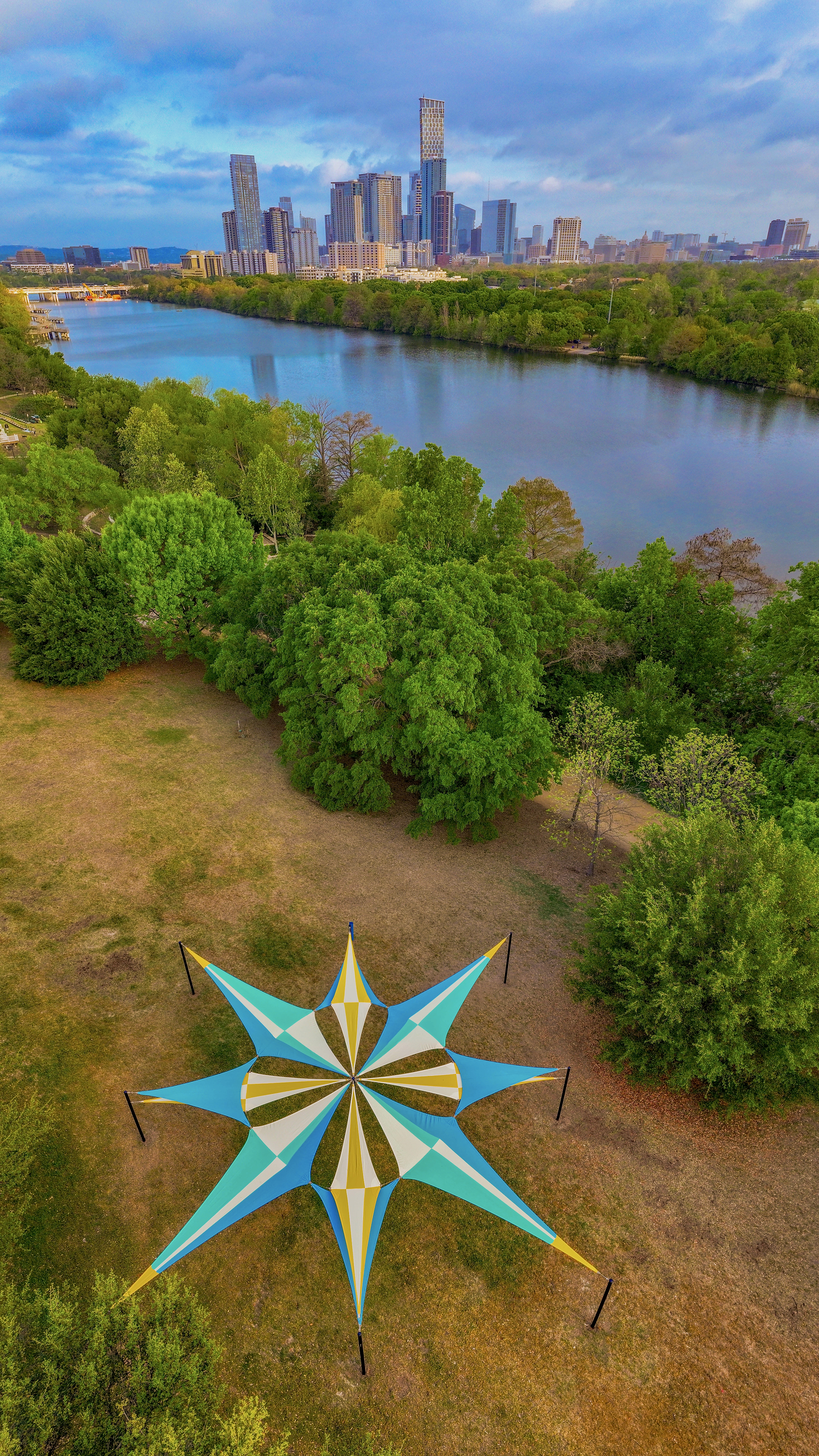
Priscilla Lustig, Steef Crombach
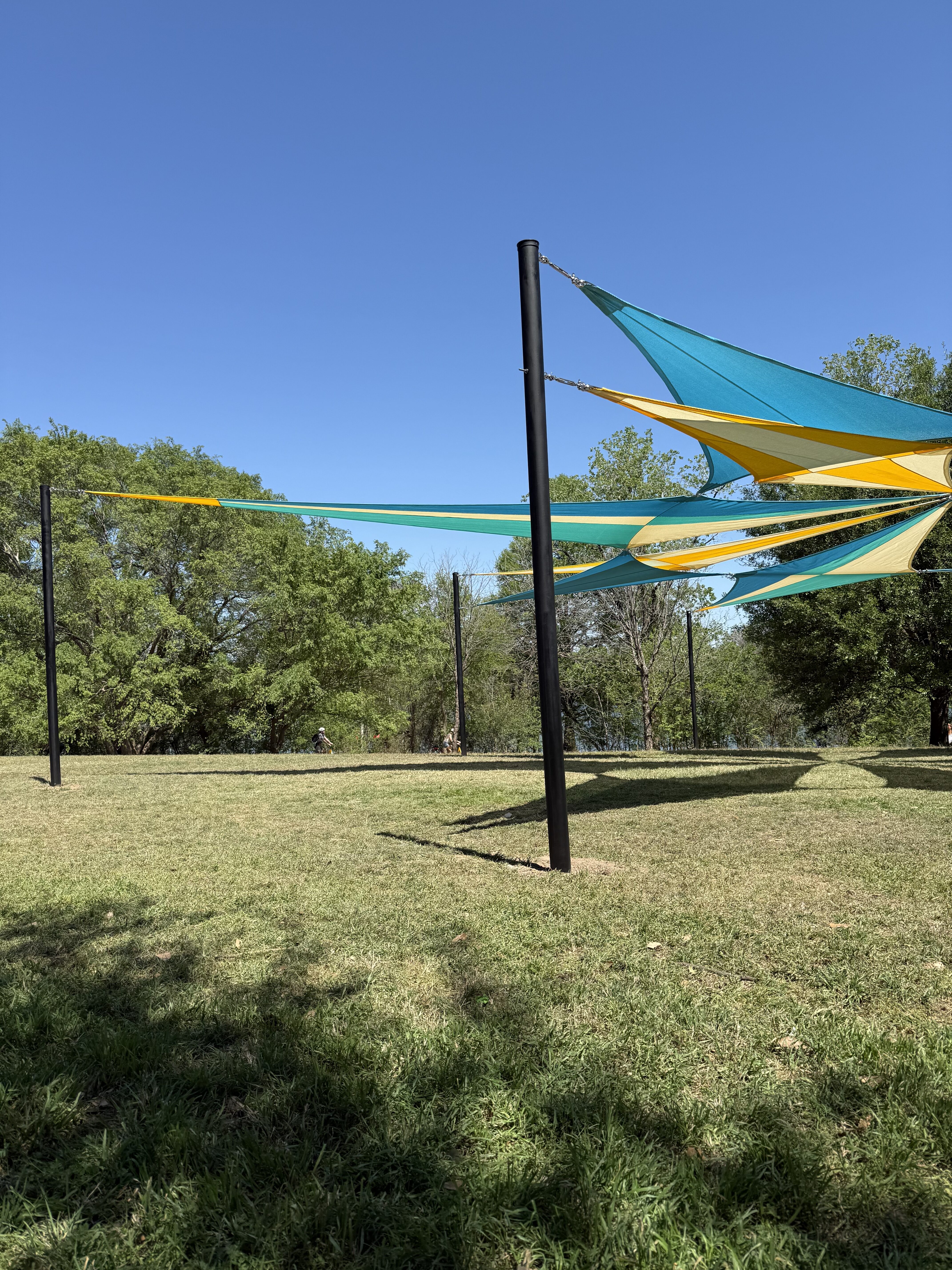
Priscilla Lustig, Steef Crombach
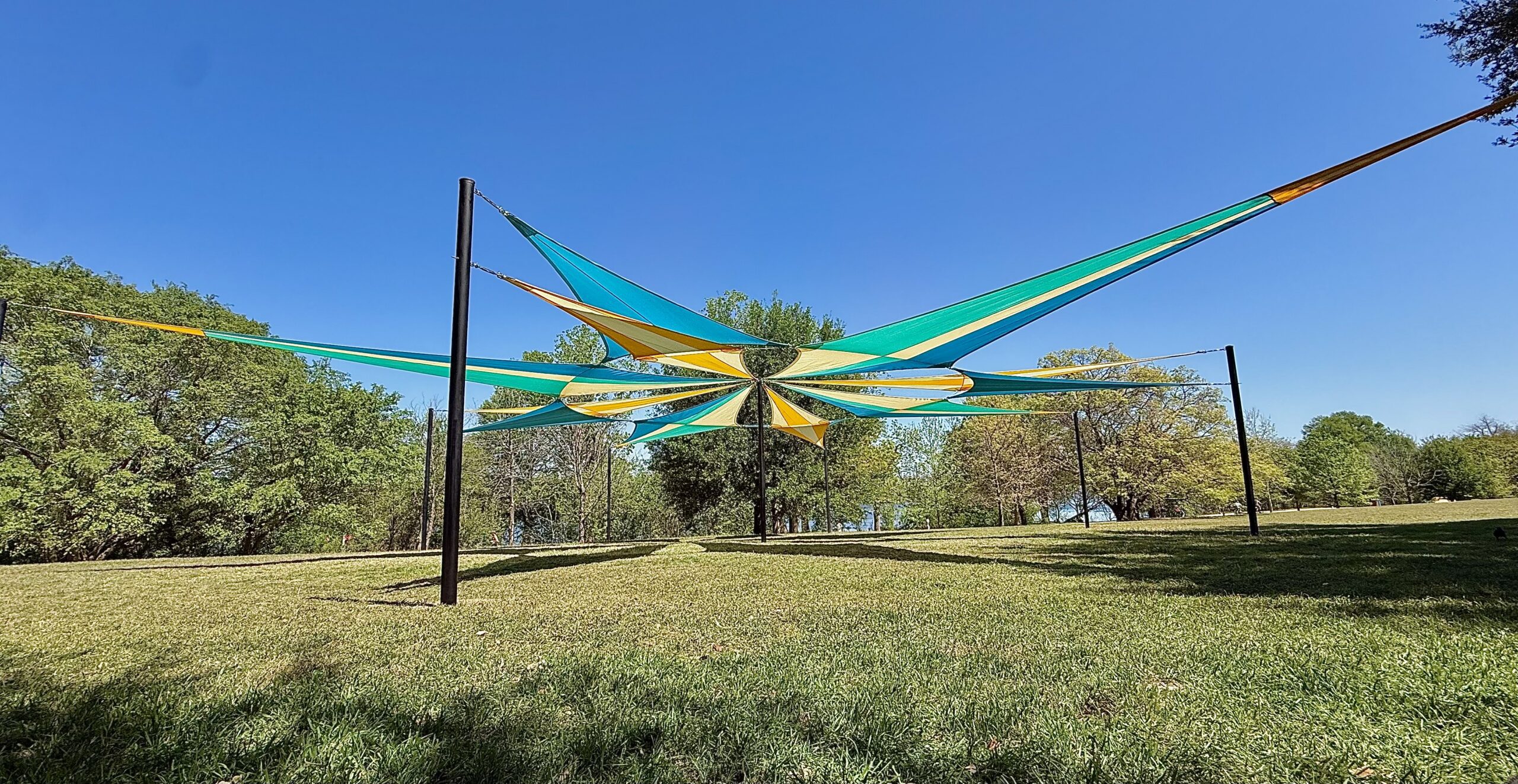
Priscilla Lustig, Steef Crombach
Priscilla Lustig, Steef Crombach
Priscilla Lustig, Steef Crombach