TEXTILES.ORG



Company:
Chicago Marine Canvas
Project Details
Fabric 1
Stamoid Top - Black
Producer/Manufacturer:
Serge Ferrari North America Inc.
Primary Use:
Main Fabric
Fabric 2
Strataglass
Producer/Manufacturer:
Herculite Products Inc.
Primary Use:
Secondary Fabric
Fabric 3
SolarFix PTFE Thread 2000
Producer/Manufacturer:
Quality Thread and Notions
Primary Use:
Thread
Fabric 4
Lenzip Zippers #10
Producer/Manufacturer:
Lenzip
Primary Use:
Zippers
Please describe the project specifications
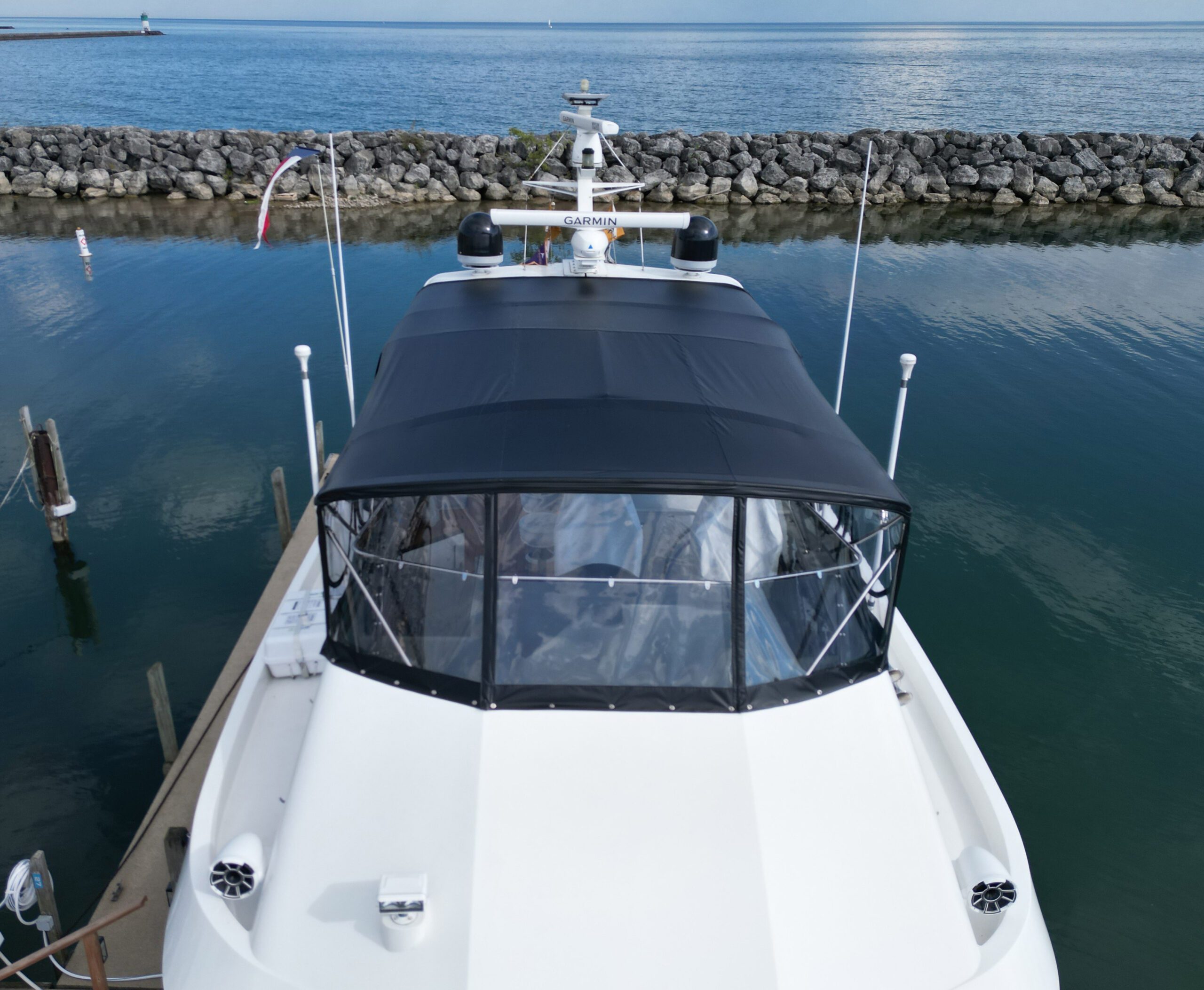
After a powerful storm passed through, we received a call from our customer reporting extensive damage to his bridge enclosure. Upon inspection, we found the canvas to be a total loss and most of the 1¼" stainless-steel frame severely bent or torn away. The 78’ Hatteras had also sustained fiberglass damage where the original frame had been ripped out.
During our initial consultation, the owner expressed satisfaction with the previous enclosure layout. We suggested a few design improvements to enhance airflow and increase visibility below the existing fixed windshield on the bridge. These enhancements that would also help the enclosure perform better in future storms.
Before fabrication, we took detailed digital measurements of the frame, mounting points, and arch. These were analyzed in our CAD software to determine which components could be salvaged and which needed replacement. We then bent new stainless-steel frame pieces and added structural reinforcements for greater rigidity and storm resistance. To improve sealing and fit, we incorporated a PVC track system along the arch, which also provided a cleaner, more watertight connection for the top and forward windows.
Once the frame was rebuilt, leveled, and balanced, we measured for the new 19’ x 12’ enclosure and began the design and rendering process. The final design featured 16 custom panels spanning the bridge. After presenting detailed renderings and receiving client approval, we moved into full fabrication.
The completed installation exceeded the customer’s expectations. The new enclosure not only restored the vessel’s sleek profile but also offered superior strength, improved visibility, and enhanced airflow. The client was thrilled with the outcome—and confident that the enclosure was now ready to weather future storms.
What is unique or complex about the project?
This project was unique and challenging for several reasons. The overall size of the enclosure (spanning nearly the full width of the bridge) pushed our team to innovate throughout the design, fabrication, and installation process. Managing the top alone required precision and teamwork; it took three installers to carefully unfurl the massive canvas top across the bimini frame and tension it evenly into place. The bimini top also included strap features on the edges to secure it to the frame when the window panels have been removed.
Another distinctive aspect was the frame configuration, which was mounted outside and below the windshield - an uncommon layout compared to most bridge enclosures we build. This design demanded custom fittings and precise alignment to ensure proper sealing and visibility.
The stainless-steel frame rebuild also proved to be one of the most challenging parts of the project. We removed all of the old, corroded fittings and replaced them with new components fabricated to exact dimensions for a secure and polished fit.
Overall, this enclosure tested every stage of our process—from CAD design and digital patterning to full-scale fabrication and installation. We were extremely pleased with the final result and consider it one of our signature projects of the season.
Content is submitted by the participant. ATA is not responsible for the content descriptions of the IAA award winners.

Chicago Marine Canvas